


European vs North American rockhounding reveals two of the world’s most diverse and rewarding mineral collecting cultures, where European rockhounding traditions emphasize centuries-old mineral localities, historic mining districts, and tightly regulated field collecting across countries like Germany, Austria, France, and the United Kingdom, while North American rockhounding is defined by vast open access public lands, prolific pegmatites, and legendary mineral regions in Canada and the United States. This comparison of European mineral collecting and North American rockhound culture highlights key differences in geology, access rights, collecting ethics, and specimen diversity, from alpine clefts and classic European crystal localities to expansive North American quartz, feldspar, beryl, and rare-element pegmatites.


Rockhounding in Europe vs North America
Introduction: Two Continents, Several Philosophies
Rockhounding is a global hobby, but the experience of rockhounding in Europe versus rockhounding in North America is shaped far more by land use, mineral collecting traditions, geology access, and legal frameworks than by geology itself. While both regions host world-class mineral localities, the way collectors engage in mineral collecting, prospecting, and field collecting differs dramatically from place to place.
At its core, the contrast in rockhounding Europe vs North America can be summarized simply by:
-
North America rockhounding: a landscape of access, exploration, and Crown land prospecting
-
European rockhounding: a landscape of permission, structure, and regulated mineral collecting
In North America—especially across Canada and the United States—vast tracts of public land such as Crown land in Ontario, provincial forests, and BLM-style public access regions allow hobbyists to actively explore for mineral occurrences with relatively few barriers. In Canada, serious collectors can even become licensed prospectors, working through modern digital claim systems such as Ontario’s MLAS mining claim system, bringing modern mineral exploration in Ontario into a structured digital framework. In Canada you can prospect from a computer in your living room.
So here I sit amongst winter’s fallen trees in Northern Ontario—deep in classic Canadian rockhounding terrain, where skarns, pegmatites, vein dykes, and Precambrian outcrops define the landscape. I can smell the earth. I watch a newt crawl amongst the moss shrouded tailings. An adit yawns darkly from under a hillside. Collapsing beams are a warning as to the danger of entry. This is the heart of Ontario rockhounding and mineral prospecting, where exploration is still direct and field-based. I am out for the first time this year, following up on claims that I've identified through the winter. The season's rockhounding begins in this slushy, mud-drenched terrain of half melted swamps and hidden valleys. It is only Mark and I here, at least a month before others venture northwards, but we are hard-core. Comfort is secondary to our locating untouched mineral occurrences, we run a crystal mine and many rockhounds rely on our ability to locate great digging spots.
Trudging deep into the woods we are following the tracks of wolves along the edge of a cliff face; Its that transitional season when both rockhounds and hungry bears emerge from their holes. Soon it will warm and insects will emerge from the swamps, but for now lit is open—hundreds of acres of untouched pegmatite geology, skarns and vein dykes. It is the granite and lakes that define my collecting landscape. This is crown land, we collect what we see - no more than what can be carried from a single location each year (our structure is lose and generous). It's been 6 hours and there's been no sign of other humans.
Europe is different. Its rockhound culture is built around mineral collecting clubs, historic localities, and revisiting known mineral deposits rather than wide-open exploration. Countries like Norway, Sweden, and France still offer excellent collecting opportunities—especially Swedish pegmatites, Norwegian feldspar zones, and Alpine fissure minerals in France—but the structure of access remains tightly controlled. Europe is densely populated, it curtails the freedom of a rockhound.
Neither European nor North American systems are superior. They simply produce different kinds of rockhounds, shaped by freedom of exploration versus regulated mineral access systems. The North American rockhound is speculative, suited to ill-regulated frontier lands. The European rockhound is governed by oversight, working within the hierarchy, an academic, highly knowledgeable within a narrow framework.
Land Access and Legal Frameworks (Mineral Collecting Laws Europe vs Canada)
In North America, extensive public land systems fundamentally shape rockhounding in Canada and the United States. In Canada, Crown land mineral collecting, provincial forest exploration, and recreational prospecting allow broad access for field collectors, provided environmental and mining claim regulations are respected.
Regions like Ontario offer vast Precambrian Shield geology, where collectors explore pegmatites, roadcuts, mineralized outcrops, and abandoned mining districts. This system encourages independence, long-distance travel, discovery-based field rockhounding and mineral exploration. In Northern Ontario a rockhound can stop their car along the highway, wander a few feet into the forest and usually be legally within their rights to sink their pick into the ground. In Europe its not so simple. In Germany 90% of land is privately owned, in Switzerland its 60% with the rest communally owned. In Canada 89% of land is publicly owned - Crown Land.
One important distinction is the transition from collector to prospector. Moving into Ontario mineral prospecting and mining claim ownership introduces legal responsibilities. You are expected to file assessment reports, maintain claim status, and comply with government mineral tenure systems. This transforms casual rockhounding in Ontario into regulated exploration activity.
Europe operates differently. In most of European mineral collecting regions, land is privately owned or institutionally controlled, meaning access requires permission. In countries such as Germany, Switzerland, and Austria, collecting often depends on mineral club membership, quarry agreements, or alpine collecting permits.
Environmental protection laws, mining safety regulations, and cultural heritage protections further restrict casual entry, making spontaneous rockhounding in Europe far less common than in North America.
In Ontario, mineral clubs are comparatively informal. Many function as loose associations of rockhounds, amateur geologists, and mineral collectors in Canada, with varying levels of engagement. Some members are highly active field collectors, while others drift in and out of participation over time.
Conflict Between Rockhounds and Landowners in Europe (Mineral Collecting Access Issues)
Across Europe, some of the clearest conflicts in European rockhounding and mineral collecting access arise from unauthorized entry into active or sensitive geological sites. Its a temptation to rockhounds irrespective of the continent.
In regions such as the Erzgebirge (Germany/Czech border mineral district) and the Black Forest, collectors entering working quarries without permission have caused rockfall hazards, machinery disruption, and legal liability issues. As a result, many once-open European mineral localities have been closed or restricted to organized club access only.
The Swiss Permitting System (Alpine Crystal Collecting Switzerland)
Similar tensions exist in the Swiss Alps mineral collecting system, where unauthorized “Strahler” activity—such as over-collecting alpine fissures or using power tools—has led to strict permit systems, fines, and seasonal restrictions.
The Swiss system is best understood as a multi-layered mineral access framework, involving federal, cantonal, and local regulations. This is why rockhounding in Switzerland varies dramatically from valley to valley.
Most alpine collecting requires explicit permission, as productive zones such as alpine fissure quartz pockets, moraine mineral deposits, and high-altitude crystal zones are often located on private or regulated land.
In Switzerland, rockhounding is tightly regulated and fines can be significant, especially in well-known areas like Binntal, where a permit (often around CHF 30 per day) is mandatory and authorities regularly conduct spot checks. Collecting without a permit or violating local rules can result in fines typically ranging from CHF 100 to 1,000 for minor to moderate infractions, along with possible confiscation of tools and specimens. More serious violations—such as digging in protected areas, causing environmental damage, or using heavy equipment—can trigger much steeper penalties under Swiss law, including income-based “day fines” that scale with the offender’s earnings and can reach several thousand francs or more. In practice, this means a casual rule breach might cost a few hundred francs, while illegal excavation or damage in sensitive Alpine environments can quickly escalate into fines in the thousands, reflecting Switzerland’s strict approach to land use, environmental protection, and mineral resource management.
In regions with strong Alpine crystal collecting traditions, permits may be tied to historic “Strahler” practices—professional alpine crystal hunters who work legally within regulated frameworks.
In places like Habachtal (Austria), conflicts over emerald mining zones, fragile alpine terrain, and tourism pressure have led to increased regulation.
Conflicts over emerald mining in Austria are most strongly associated with the Habachtal valley in the Hohe Tauern range, one of the few significant emerald localities in Europe and a classic example of tension between alpine gemstone collecting, conservation policy, and local land use. Here, emerald-bearing schists and beryl-rich zones have attracted both professional mineral collectors and recreational “Strahler”-style activity, but access is tightly regulated due to fragile alpine terrain, tourism pressures, farming interests, and environmental protection rules that restrict digging and disturbance of the valley floor. Disputes have arisen when unauthorized collecting or aggressive extraction methods have damaged trails, disturbed grazing land, or conflicted with conservation goals, leading to stricter permitting and increased oversight by local authorities.
Across Europe, similar patterns emerge: collecting conflicts are rarely about geology—they are about land ownership, mineral rights, environmental protection, and heritage management.
Geological Setting and Localities (Pegmatites, Shields, and Alpine Mineral Zones)
North America is defined by vast cratonic shields, pegmatite belts, and glacially exposed mineral terrain. In Ontario, for example, pegmatite mineral systems host feldspar, quartz, mica, beryl, columbite, and rare earth mineral phases.
These environments define classic Canadian rockhounding and mineral prospecting, where collectors interpret geology directly in the field.
Europe, by contrast, is defined by highly concentrated and historically documented mineral localities. Countries such as Sweden, Norway, France, and the United Kingdom offer exceptional European mineral collecting diversity, but collecting is often centered around known sites rather than open exploration.
Sweden is famous for granite pegmatites and feldspar-rich mineral zones, while Norway offers classic feldspar, amphibole, and rare mineral pockets. France and Switzerland are known for Alpine quartz fissure crystals and high-altitude mineral systems.
Collecting Culture and Community (Rockhounding Clubs Europe vs North America)
North American rockhounding emphasizes independence. Many collectors operate alone or in small groups, relying on maps, satellite imagery, and direct field observation. The culture overlaps heavily with amateur mineral prospecting in Canada, prioritizing discovery, terrain reading, and geological interpretation.
In Europe, mineral collecting clubs play a central role in organized rockhounding culture. In countries like Germany and the Czech Republic, clubs coordinate access, organize field trips, and provide training, insurance, and structured collecting systems.
European vs North American Mineral Clubs (Rockhound Club Systems Compared)
European and North American mineral clubs both support the same hobby, but they function very differently due to land access laws, mining rights systems, and cultural expectations in mineral collecting.
In Europe—especially Germany, Austria, and Switzerland—clubs act as formal access organizations. They negotiate directly with quarry operators, landowners, and government agencies to secure collecting days.
Membership is often essential for accessing productive European mineral localities, particularly in alpine or restricted regions. These clubs have structured hierarchies, safety regulations, and strict collecting rules.
In North America, especially Canada and the United States, mineral clubs are more community-based. Because of extensive public land access and Crown land rockhounding opportunities, collectors often do not require clubs to access collecting sites.
Clubs instead focus on education, field trips, and community knowledge-sharing in North American rockhounding culture.
One rare exception is the Bancroft rock and gem club, which historically held mineral rights to a sapphire occurrence on the York River—an unusual case of club-based mineral tenure in Canada.
European Mineral Club Culture (Locality-Based Collecting Systems)
European mineral clubs are often deeply tied to specific geological districts. A strong example is the Freiberg mining region in Saxony, Germany, within the broader Erzgebirge mineral belt. Here, mineral clubs are connected to the historic Freiberg Mining Academy tradition, one of the oldest centers of European mineralogical science and mining geology.
In both Switzerland and Germany, mineral club hierarchies are especially well-developed, but they reflect slightly different cultural approaches—Switzerland leaning toward traditional, almost guild-like structures, and Germany toward highly organized, association-based systems.
In Switzerland, the hierarchy often begins with small local clubs and alpine collecting groups, but it is strongly influenced by the historic strahler tradition—independent crystal hunters who operate within informal yet deeply respected networks. These local groups may be loosely organized on paper, but in practice they follow a clear internal hierarchy based on experience, territory knowledge, and mentorship. Above them are cantonal or regional associations that help coordinate access to collecting areas and maintain relationships with landowners and authorities. Nationally, many clubs and collectors connect through umbrella organizations like the Schweizerische Vereinigung der Strahler und Mineraliensammler, which promotes ethical collecting, safety, and preservation of alpine traditions. What makes Switzerland unique is that hierarchy is not just administrative—it is cultural, with senior strahlers holding significant influence and knowledge passed down in a semi-formal apprenticeship style.
Germany, by contrast, has one of the most structured and bureaucratic club systems in the mineral collecting world. Local clubs (Vereine) are formally registered organizations with elected leadership and defined statutes. These clubs are often grouped into regional sections and are closely tied to national umbrella organizations such as the Vereinigung der Freunde der Mineralogie und Geologie and the more academically oriented Deutsche Mineralogische Gesellschaft. The hierarchy is clear and institutional: individual members → local clubs → regional groups → national societies. These higher-level bodies coordinate publications, large mineral shows, research collaboration, and educational standards. Compared to Switzerland, authority in Germany is more formalized and rule-based, with less reliance on personal reputation and more on organizational structure.
Overall, while both countries exhibit strong hierarchies, Switzerland’s system is shaped by tradition, mentorship, and localized authority, especially in alpine regions, whereas Germany’s system emphasizes formal governance, national coordination, and integration with academic mineralogy. In both cases, however, collectors operate within a clearly defined structure that connects grassroots club activity to national and even international mineralogical institutions.
Unlike North American clubs, which support broad exploration, European clubs act as gatekeepers of access to specific mineral systems and geological districts.
Field Methods and Experience (Exploration vs Structured Collecting)
North American collectors typically engage in exploratory fieldwork—hiking into remote terrain, studying pegmatite zoning, glacial transport systems, and mineral float tracing techniques.
This represents classic Canadian rockhounding and prospecting methodology, where each trip is uncertain and discovery-driven.
European collecting is more structured. Access is often time-limited and restricted to quarries, dumps, or alpine zones. In Switzerland and Austria, collecting may involve technical alpine climbing into high-altitude mineral fissures and crystal pockets, requiring both planning and skill.
German Silver Collecting Systems (Erzgebirge Mineral Collecting, Freiberg Silver District)
German silver collecting is one of the most historically significant and scientifically structured forms of European mineral collecting, rooted deeply in centuries of mining across the Erzgebirge (Ore Mountains) and centered on legendary districts such as Freiberg. Unlike many modern styles of rockhounding in Europe and North America, which often emphasize discovery or aesthetic display, the German approach to native silver collecting, Erzgebirge mineralogy, and systematic specimen documentation is fundamentally scientific, historical, and classification-driven.
At the heart of German silver mineral collecting systems is native silver and its associated mineral assemblage. Classic specimens include wire silver, arborescent silver, and crystalline silver growths often found alongside minerals such as acanthite, calcite, baryte, and cobalt–nickel arsenides. These associations are studied as part of a paragenetic mineral sequence, meaning collectors are interested not just in the specimen itself, but in the order and geological conditions in which the minerals formed.
This is a defining feature of systematic mineral collecting in Germany: specimens are interpreted as part of a broader geological and mineralogical framework rather than isolated objects. A silver specimen from Freiberg, for example, is not just valued for its appearance, but for its exact mine, vein system, depth level, and historical mining context within the Erzgebirge mining district.
German collectors typically approach silver mineral specimens with an academic mindset that blends hobby collecting with scientific mineralogy. Many collectors are deeply familiar with crystallography, ore genesis, and hydrothermal systems, and often maintain relationships with museums, universities, and geological institutions. This makes German silver collecting one of the most research-integrated forms of European rockhounding and mineral specimen study.
Another defining feature is the importance of provenance and historical locality data. Old labels—sometimes handwritten during active mining centuries ago—are considered an essential part of a specimen’s value. A silver specimen from Freiberg or Schneeberg can increase significantly in importance if it is linked to a documented historic collection, early mining academy specimen, or known scientific locality.
This reflects a broader principle in German mineral collecting culture: a specimen is incomplete without context. Location, mine name, vein system, associated minerals, and historical documentation are all considered essential metadata. Without this, even a visually striking piece is considered scientifically weak or “unresolved.”
Systematic Collecting Philosophy in Germany (Mineral Classification and Structured Collections)
The German approach to systematic mineral collecting is built on organization and completeness. Rather than collecting randomly or focusing solely on visual appeal, collectors often structure their collections around specific scientific or classification goals.
Common approaches in German mineral collection systems include:
-
Building complete mineral groups (e.g., arsenates, sulfides, or native elements)
-
Documenting all known species from a specific locality or mining district (e.g., Erzgebirge mineral suite collecting)
-
Focusing on type locality minerals (first-discovered mineral species)
-
Assembling full paragenetic sequences from a single ore deposit or vein system
This results in collections that function more like curated mineralogical reference libraries than decorative displays. Even very small specimens, including micromounts, are highly valued if they fill a scientific gap or represent rare mineral species from a documented locality.
In contrast to many forms of North American rockhounding, where collectors may prioritize size, aesthetics, or field discovery, German collectors often prioritize completeness, scientific accuracy, and locality precision over visual impact.
Micromount Culture in German Silver Collecting
A particularly important aspect of German mineral collecting systems is micromounting. While large native silver wires and spectacular crystallized specimens are highly prized, many collectors also focus on micromount specimens—small, carefully prepared samples studied under magnification.
Micromount collecting allows German collectors to document fine crystallographic detail and rare mineral associations that may not be visible in larger cabinet specimens. This reinforces the broader scientific rockhounding culture in Germany, where even small specimens can carry significant mineralogical importance if they represent rare phases or important geological relationships.
Freiberg and the Erzgebirge: Historic Center of Silver Mineralogy
The Freiberg mining district in Saxony is one of the most important historical centers of European silver mining and mineral collecting culture. The surrounding Erzgebirge region has produced some of the most iconic native silver specimens in Europe, along with a wide range of associated ore minerals.
Freiberg is also home to one of the world’s oldest mining education institutions, the Freiberg Mining Academy, which has heavily influenced the development of systematic mineralogy and ore deposit science.
Because of this long scientific tradition, many Freiberg and Erzgebirge specimens are tied directly to documented mining records, historic collections, and academic studies. This makes the region a cornerstone of scientific mineral collecting in Europe, where specimens are often treated as both geological samples and historical artifacts.
Cultural Significance of German Silver Collecting (Science, Heritage, and Mineral Systems)
German silver collecting represents one of the clearest intersections between mineralogy, mining heritage, and scientific rock collecting culture in Europe. It is not simply about finding attractive specimens; it is about understanding ore formation systems, documenting geological processes, and preserving historical mining knowledge.
Collectors often maintain detailed records that include:
-
Exact mine and shaft location
-
Vein system or ore body name
-
Associated mineral assemblages
-
Geological formation environment
-
Historical extraction period
This level of documentation reflects a deeply rooted tradition in European mineral science, where specimens are considered part of a broader geological archive.
German vs North American Silver Collecting (Systematic vs Exploratory Approaches)
The German approach to silver collecting contrasts strongly with North American rockhounding systems such as Cobalt silver collecting in Ontario.
In Germany, especially in districts like Freiberg, silver specimens are valued primarily for:
-
Scientific context
-
Precise locality data
-
Paragenetic relationships
-
Historical mining documentation
In North America, particularly in places like Cobalt, Ontario, native silver collecting in Canada is often more field-driven and visually oriented. Collectors typically prioritize:
-
Visible native silver wires and masses
-
Aesthetic crystallization
-
Field discovery and recovery
-
Historic mining district exploration
While provenance is still important in North America, it is often secondary to the experience of discovery and the visual impact of the specimen. In Germany, by contrast, provenance and systematics are central to the value of the specimen itself.
This difference reflects a broader divide between European mineral collecting culture (structured, archival, and scientific) and North American rockhounding culture (exploration-driven, field-based, and discovery-oriented).
The North American Approach to Collecting Silver (Cobalt Native Silver, Ontario Rockhounding Systems)
The North American approach to silver collecting, particularly in the historic Cobalt mining district of Ontario, represents a very different philosophy from the structured, science-driven German silver collecting systems found in the Erzgebirge and Freiberg. In Canadian rockhounding culture, especially within Ontario’s Precambrian Shield, silver is approached less as a classified mineral system and more as a direct expression of mining history, field discovery, and visual mineral wealth.
In Cobalt, one of the most famous native silver mining districts in North America, collecting is strongly tied to the early 20th-century silver rush. This historic district produced spectacular native silver specimens found in association with calcite, quartz veins, and cobalt–nickel arsenide mineralization. Unlike German collections, which emphasize paragenesis and systematic classification, Cobalt silver collecting in Ontario is often centered on the recovery of visually striking native silver wires, sheets, and arborescent growths.
Much of the material collected in Cobalt rockhounding environments comes from mine dumps, surface exposures, and reworked historic workings rather than deep geological analysis. The emphasis is on field recovery and discovery-based collecting, where the excitement comes from finding visible silver in situ rather than reconstructing a full mineralogical sequence.
This reflects a broader principle in North American mineral collecting culture: the experience of discovery is often as important as the specimen itself. In regions like Northern Ontario, collectors operate across vast Crown land geological terrain, tracing mineral float, studying exposed vein systems, and interpreting glacially scoured bedrock to locate potential mineralization zones.
German vs Cobalt Silver Collecting (Scientific Systems vs Field Discovery)
The contrast between German silver collecting systems and Cobalt native silver collecting in Canada highlights one of the clearest differences between European mineral collecting culture and North American rockhounding culture.
In Germany (particularly Freiberg and the Erzgebirge):
-
Specimens are valued for exact mine, vein, and historical context
-
Collections are structured around mineralogical systems
-
Paragenesis and crystallography are central
-
Documentation is essential to specimen value
-
Museums, universities, and collectors are tightly connected
In Cobalt, Ontario:
-
Specimens are valued for visible native silver exposure
-
Field discovery and recovery are central to collecting
-
Historic mining district context is important but less rigid
-
Aesthetic impact and rarity of display material are emphasized
-
Exploration of dumps, veins, and surface exposures dominates
This creates two fundamentally different interpretations of the same mineral:
-
In Germany, silver is a documented mineral system within a scientific framework.
-
In Cobalt, silver is a historic and visual mining treasure discovered through field exploration.
The Strahler Tradition (Swiss Alpine Crystal Collecting System)
The “Strahler tradition” in mineral collecting generally refers to the Alpine crystal hunting culture found in the German-speaking Alps, especially Switzerland, Austria, Bavaria, and parts of northern Italy. A Strahler is a traditional term for a high-mountain crystal collector who searches remote alpine terrain for mineral-rich fissures known as clefts or pockets.
Unlike casual rockhounding, the Strahler tradition is closely tied to mountaineering skill and deep geological knowledge. Success depends on understanding alpine structures like fault zones, tension cracks, and metamorphic host rocks that can contain crystal-bearing pockets. Strahlers often use climbing techniques, ropes, and seasonal timing to safely access high elevations, usually during summer when snow and ice have retreated. The work is physically demanding and historically required both local knowledge and experience passed down through families or regional communities.
This tradition has deep cultural roots dating back to at least the 18th and 19th centuries, when Alpine minerals became highly prized by European scientists, aristocrats, and museums. Many Strahler families developed generational expertise in locating productive clefts, contributing important specimens to both private and institutional collections. Today, the tradition still exists but is more regulated and influenced by modern tools and conservation concerns, balancing mineral collecting with environmental protection and sustainable access to fragile alpine zones.
Geological Focus of the Strahler System (Alpine Fissure Mineral Collecting)
The geological foundation of the Strahler tradition lies in alpine fissure formation systems. These are natural fractures in metamorphic and igneous rocks formed during mountain uplift. Mineral-rich fluids circulate through these fractures, slowly depositing high-quality crystals over long geological time periods.
Key minerals associated with Swiss alpine rockhounding and Strahler collecting include:
-
Smoky quartz (Morion quartz)
-
Gwindel quartz formations
-
Adularia feldspar crystals
-
Rutile-in-quartz inclusions
-
Austrian sphene
These specimens are highly prized in European mineral collecting markets, not only for their aesthetic quality but also for their geological formation environment and high-altitude origin.
Cultural and Legal Structure of Alpine Collecting in Switzerland
Unlike the open-access model seen in North American Crown land rockhounding, Swiss mineral collecting systems operate within a tightly regulated framework of permits, seasonal access, and landowner permissions.
The Swiss system is characterized by:
-
Cantonal-level permitting systems
-
Seasonal restrictions on alpine collecting
-
Landowner permission requirements
-
Environmental protection regulations
-
Strict limits on excavation tools and methods
In many regions, alpine crystal collecting is tied to traditional Strahler rights, which are often passed through families or established collecting networks. Good alpine localities are frequently protected through informal knowledge systems, reinforcing the exclusivity of Swiss alpine mineral collecting culture.
Conflict and Regulation in European Mineral Collecting (Europe Rockhounding Challenges)
In Europe, mineral collecting conflicts often arise from the intersection of land ownership, safety regulations, environmental protection, and historical mining heritage.
In regions such as the Erzgebirge (Germany/Czech border), unauthorized entry into quarries has led to closures due to rockfall hazards, liability concerns, and industrial interference. Similarly, in the Black Forest, mineral collecting restrictions have increased due to safety risks in active or abandoned mining sites.
In Switzerland, alpine collecting disputes often involve:
-
Environmental protection in fragile alpine ecosystems
-
Over-collection of mineral pockets
-
Trail damage in high-altitude regions
-
Competition between traditional Strahlers and commercial collectors
These patterns show that in European rockhounding systems, conflict is rarely about geology itself—it is about access, regulation, and land-use control.
Broader European Collecting Cultures (Country-by-Country Rockhounding Styles)
Across Europe, mineral collecting styles vary significantly by country, but all are influenced by land ownership systems, historic mining traditions, and regulated access frameworks.
-
Germany (Erzgebirge rockhounding): Systematic mineralogy, silver, fluorite, uranium minerals
-
Switzerland (Alpine crystal collecting): Strahler tradition, quartz fissures, high-altitude collecting
-
France (Mont Blanc mineral collecting): Aesthetic quartz crystals and alpine mineral zones
-
Austria (Habachtal emerald region): Alpine gem minerals and structured field collecting
-
Czech Republic (Jáchymov and Příbram districts): Uranium minerals, silver, micromount collecting systems
-
England (Cornwall and Weardale mining districts): Historic provenance-based collecting culture
-
Sweden and Norway (Scandinavian pegmatites): Feldspar-rich pegmatite mineral systems and open terrain collecting
Each of these regions contributes to a broader European mineral collecting tradition that emphasizes locality, documentation, and structured access.
Provenance in English Mineral Collecting (Historic Rockhound Culture UK)
In England, mineral provenance and specimen history are often as important as the mineral itself. This reflects a long tradition of mining, early geological study, and antiquarian collecting culture.
Classic British mineral localities such as Cornwall and Weardale produce minerals like fluorite, galena, calcite, and pyromorphite. However, the value of these specimens is often heavily influenced by:
-
Historic mining district origin
-
Old label documentation
-
Collector or dealer lineage
-
Museum or historic collection association
Because access to new materials is limited, much of English rockhounding culture relies on historic dumps, coastal exposures, and long-established mining sites. This reinforces a strong focus on geological history and specimen provenance in UK mineral collecting.
The Sub-culture of Mineral Collecting in Spain
Spain’s mineral collecting subculture is shaped by a strong overlap between collectors, dealers, and access to localities, creating a relationship-driven environment rather than a formalized club system. Unlike Central European traditions, Spain has fewer rigid hierarchies or codified ethics, and collectors often rely on personal networks, local knowledge, and dealer connections to gain access to sites. The culture places a heavy emphasis on famous localities—such as Navajún pyrite or Asturias fluorite—and on high-quality, aesthetic specimens, reflecting both regional pride and the influence of prominent collections like the Folch Mineral Collection. This has led to a scene where prestige is tied not just to rarity, but to the beauty and provenance of specimens.
At the same time, Spain’s collecting culture exists in a semi-open and sometimes ambiguous access environment, where many sites are on private or historically mined land and enforcement can be inconsistent. This has fostered a quiet, discreet approach among experienced collectors, balanced by a growing commercial and tourism element. Guided trips, dealer-organized excursions, and international interest have turned parts of Spanish mineral collecting into a hybrid between hobby and professional activity. Overall, the Spanish scene is best understood as locality-focused, aesthetically driven, and socially networked—less formal than Alpine traditions, but deeply rooted in the country’s long mining history.
There are certain aspects of the Spanish sub-culture that are quite similar to the North American approach, in particular the relationship driven environment. In my experience a new collector in a club is somewhat isolated until he/she makes contacts. The best areas tend to remain secret and are shared when you make friends or have alocation to trade. Many of the more established clubs in Canada have dealers that are club members (e.g. the Bancroft club and the Walker club).
Russian Mineral Collecting Systems (State-Controlled Rockhounding Structure)
In Russia, mineral collecting operates under a fundamentally different system where all mineral resources are state-owned. This creates a highly controlled environment for rockhounding and mineral access in Russia.
Most significant mineral localities, including those in the Ural Mountains and Siberian pegmatite belts, are:
-
Active mining operations
-
Licensed exploration zones
-
Restricted geological areas
As a result, informal rockhounding is limited, and access to mineral localities is typically controlled by mining companies or government-linked institutions.
During the Soviet era, amateur geological participation was more structured through educational and state-sponsored programs. However, modern systems are more commercially and industrially controlled, reducing opportunities for independent Russian mineral collecting hobbyists.
Big Picture: Global Rockhounding Systems (Europe vs North America Mineral Collecting)
When viewed as a whole, global rockhounding and mineral collecting cultures are not primarily defined by geology, but by land access systems, legal frameworks, mining heritage, and cultural tradition. The contrast between Europe vs North America rockhounding becomes especially clear when comparing how collectors interact with the landscape, how specimens are valued, and how access to mineral localities is controlled.
Across Europe, mineral collecting is strongly shaped by historic mining districts, regulated land access, and structured collecting traditions. Countries such as Germany and the Czech Republic emphasize systematic mineralogy, rare species collecting, and scientifically documented specimens, often tied directly to academic mineralogical institutions. England, by contrast, places heavy importance on historic provenance, mining heritage, and labelled specimen lineage, where the story of a mineral can be as important as the specimen itself.
In alpine regions such as Switzerland, Austria, and France, high-altitude rockhounding and alpine crystal collecting systems dominate. Here, the Strahler tradition and related collecting cultures focus on quartz fissure crystals, field-extracted specimens, and physically demanding mineral exploration in mountainous terrain. What really sets Switzerland apart isn’t just danger—it’s the combination of danger, history, and a highly codified subculture that elevates mineral collecting into something almost legendary.
Even in more open Scandinavian regions such as Sweden and Norway, collecting is still influenced by property rights and localized access traditions, especially in pegmatite-rich geological zones.
Russia represents a different model entirely, where state ownership of mineral resources and industrial mining control systems limit independent rockhounding. Mineral collecting is largely secondary to licensed geological exploration and mining operations, reinforcing a highly controlled access structure.
North America, particularly Canada and the United States, presents the opposite end of the spectrum. Vast areas of public land, Crown land systems in Canada, and federal land access in the United States create a landscape where exploration-based rockhounding and amateur mineral prospecting are possible at a large scale. Collectors are often able to access pegmatites, mineralized outcrops, roadcuts, glacially exposed bedrock, and historic mining districts with relatively few structural barriers compared to Europe.
This fundamental difference creates two distinct collecting philosophies:
-
North America rockhounding culture: exploration, independence, discovery, field interpretation
-
European mineral collecting culture: permission, documentation, locality history, structured access
-
Final Conclusion: Europe vs North America Rockhounding and the Global Mineral Collecting Divide
In comparing rockhounding in Europe vs North America, the most important conclusion is that mineral collecting cultures are shaped far more by land tenure systems, legal access frameworks, and historical mining traditions than by the underlying geology itself. While both continents host world-class mineral localities, the way collectors experience those localities is fundamentally different.
North America—especially Canada—supports a largely exploration-driven rockhounding system, built on Crown land access, public land exploration, and a cultural emphasis on independence and field discovery. In this system, collectors are encouraged to travel widely, interpret geology directly in the field, and actively search for new or under-documented mineral occurrences. The result is a strong tradition of amateur prospecting, pegmatite hunting, and exploratory mineral collecting across vast landscapes such as the Canadian Shield.
Europe, by contrast, operates through a more structured and regulated framework. European rockhounding and mineral collecting systems are shaped by private land ownership, strict environmental protections, mining safety regulations, and long-established collecting traditions. Access is often mediated through clubs, permits, institutional agreements, or historic rights tied to specific localities. As a result, collecting tends to be more site-specific, historically anchored, and documentation-heavy.
These structural differences extend into every aspect of the hobby:
-
Field methods: exploration-driven hiking and prospecting in North America vs structured, site-based collecting in Europe
-
Mineral clubs: informal support networks in North America vs formal access organizations in Europe
-
Specimen value: discovery context and visual impact in North America vs provenance, documentation, and locality history in Europe
-
Collecting philosophy: independence and terrain reading vs scientific classification and historical continuity
Ultimately, neither system is superior—they simply produce different kinds of collectors and different relationships with the Earth. North America fosters an exploratory, frontier-style rockhounding culture grounded in freedom of movement and geological discovery. Europe cultivates a more archival and structured mineral collecting tradition, rooted in mineralogical science, historical mining heritage, and precise locality documentation.
Together, these two systems represent complementary expressions of the same global pursuit: understanding and appreciating minerals—whether through the open-ended exploration of vast natural landscapes or the carefully curated study of historic and well-documented mineral locations.
Bio: Michael Gordon
Michael Gordon (Mick) is co-founder of Dark Star Crystal Mines. Michael has a degree in geography from the University of Guelph, a diploma in gemology from the Toronto Gemological Association and he is also a certified diamond grader. Michael has been a lifetime rockhound specializing in Bancroft area vein dykes and that is the main product of the Dark Star Crystal Mines. Having authored the 3 part series "Rockhound", Michael's writing has appeared in newspapers, magazines and books, his first having been published in 2005 (Rockwatching) by Boston Mills Press.
Works Cited:
Sinkankas, John. Field Collecting Gemstones and Minerals. Radnor, PA: Chilton Book Company, 1988.
Sinkankas, John. Gemstones of North America. Princeton, NJ: D. Van Nostrand Company, 1959.
Kunz, George Frederick. Gems and Precious Stones of North America. New York: Scientific Publishing Company, 1892.
U.S. Geological Survey. Collecting Rocks and Minerals. U.S. Geological Survey General Interest Publication. Washington, DC: U.S. Department of the Interior. https://pubs.usgs.gov/gip/collect1/collectgip.html.
Agricola, Georgius. De Re Metallica. Translated by Herbert Clark Hoover and Lou Henry Hoover. London: The Mining Magazine, 1912 (original work published 1556).
Rock Seeker. “The History of Rockhounding.” Accessed April 18, 2026. https://rockseeker.com/the-history-of-rockhounding/.
Wikipedia contributors. “Mineral Collecting.” Wikipedia, The Free Encyclopedia. Accessed April 18, 2026. https://en.wikipedia.org/wiki/Mineral_collecting.
Mindat.org. “Mineral Localities Database.” Hudson Institute of Mineralogy. Accessed April 18, 2026. https://www.mindat.org.
Updated 2016

Right: Swiss and Austrian rockhounding comes with its challenges. To really tap the untouched stuff climbing skills are often needed. In Ontario it is a sturdy pair of hiking legs and navigational skills that support your pursuit of mineral collecting. Either place a serious rockhound contends with the elements. In Ontario i'd say the bugs were probably amongst the most severe of discomforts.


Below and Left: Rugged extraction practices around hard to reach fissures, Ontario.
Right: “Glück auf” (often written Glückauf) is a traditional German greeting used by miners. The phrase comes from mining culture in regions like the Ore Mountains (Erzgebirge). It carried two key wishes, that new mineral veins (“luck”) would open up, that the miner would return safely back up to the surface.


Alpine rockhounds in Europe are often followers of the Strahler tradition that blends amatuer rockhounding with serious alpine skills and an ethic around crystal collecting.


In Europe your membership in a club is crucial to your access to many key rockhound localities. The club through its hierarchy negotiates collecting trips with land owners.
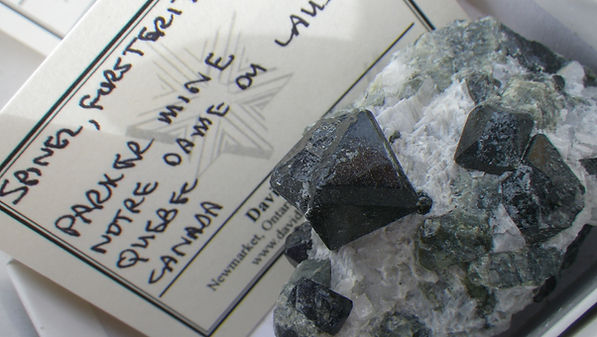
Right: What would seem like a decent label at the Bancroft Gemboree, but not for the Germans. A proper German mineral label—often called an “Etikett” or “Fundetikett”—is typically much more detailed and systematic than what you’ll see in North America. This reflects the strong influence of the Deutsche Mineralogische Gesellschaft and long-standing European collecting traditions. German labels tend to prioritize precision and traceability, sometimes down to a specific level within a mine. This comes from the historical mining culture tied to traditions like “Glück auf” and the structured documentation practices seen across central Europe. Compared to many North American labels, they are less casual and more archival in style—closer to museum standards even for private collectors.


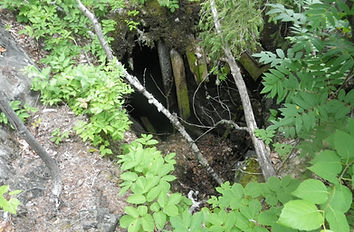
In North America it is the experience of discovery that drives many rockhounds, old adits, collapsed mills and culturally, something of the area's history. Europe seems to be more focused on the specimen in the context of its geological surroundings. Above pictures - Cobalt, Ontario.


Two distinct collecting philosophies, freedom and structure

Right: Along the north coast of Cornwall.
What makes Botallack truly remarkable is that it was a submarine mine. By the 18th–19th centuries, miners had developed pumping technology that allowed them to follow ore veins hundreds of metres out under the seabed.
-
The famous Boscawen shaft ran diagonally under the ocean for hundreds of metres.
-
At its peak, the mine produced large quantities of tin, copper, and arsenic, along with smaller amounts of silver and cobalt.
-
Total production reached roughly 14,500 tonnes of tin and 20,000 tonnes of copper.
This kind of offshore mining was incredibly dangerous—workers could hear waves crashing above them while underground.


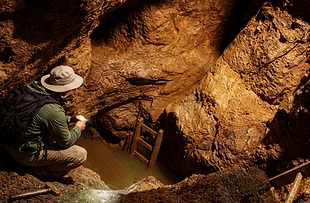

Below and Left: Germany’s historic silver mining regions are some of the most culturally rich and tightly regulated collecting environments in Europe. The two most famous districts are the Ore Mountains (Erzgebirge) along the Czech border and the Harz Mountains. These areas were central to European silver production from the Middle Ages through the early modern period, feeding wealth into Saxony and beyond.
Right: Swiss and Italian Strahler ethics differ mainly in how formal and socially enforced they are, even though both come from the same alpine crystal-hunting tradition. In the Swiss Alps—especially in places like Valais and Graubünden—ethics are strict, reputation-based, and deeply ingrained: active clefts are respected as “first finder” territory, locations are closely guarded, and breaking informal rules can permanently damage a Strahler’s standing within the community, with organizations like the Swiss Alpine Club reinforcing a culture of discipline, secrecy, and low-impact extraction. In contrast, in Italian alpine regions such as South Tyrol and Aosta Valley, Strahler ethics are more flexible and regionally variable, with weaker notions of informal ownership, greater openness about collecting areas, and norms that depend heavily on local custom or individual groups rather than a unified cultural code; while respect for active work in a cleft still exists, enforcement is looser, secrecy is less rigid, and modern pressures like tourism have further diluted traditional boundaries, making the Italian system more adaptive compared to the highly disciplined Swiss model.
Right: Looking at old cutting equipment at Intergem. Intergem is one of the most important professional gem and mineral trade fairs in Europe, held in Idar-Oberstein, Germany—a town with a long history of agate cutting and gemstone craftsmanship. This is primarily a wholesale and trade-focused show, meaning it is more oriented toward dealers, cutters, designers, and serious collectors rather than casual public browsing. It typically features a high concentration of fine gemstones, mineral specimens, jewelry designs, lapidary materials, and cutting-edge gem treatments. Many exhibitors are international, so you’ll see material sourced from Africa, South America, Pakistan, Afghanistan, and across Europe all in one place.
What makes INTERGEM stand out is its connection to the Idar-Oberstein gem tradition, which goes back centuries. The region became famous for agate cutting, and that craftsmanship still shapes the identity of the show today. As a result, you often see exceptional precision-cut stones, custom faceting work, and high-end designer pieces that reflect the German lapidary tradition.

Far Right: The author (Mick) looks out from atop Robillard Mountain across the geologically complex and heavily wooded Ottawa Valley, Ontario
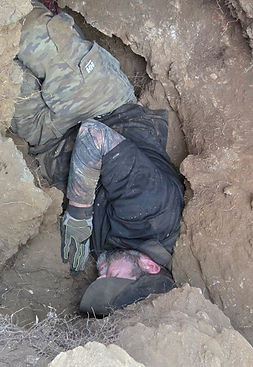
Below: Mark experiences a typical Ontario challenge. We dig a lot, they chisel a lot.
Right: A typical challenge for an Austrian rockhound.