

Many more Bancroft rockhounding locations have been forgotten than are known today. Rockhounds think that the rockhound potential of Ontario has been tapped out, they are wrong. Rockhounding is alive and better than ever for those who know how to look.


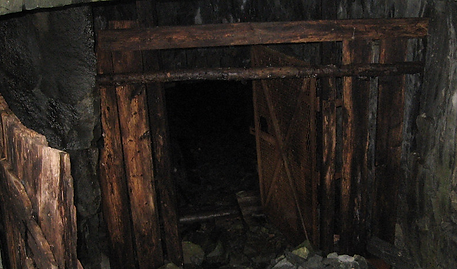
Left: Adit entrance at the Kenmac Chibougamau Mine
Rockhounding in Bancroft, Ontario: Lost and Forgotten Mineral Locations
Bancroft, Ontario—once celebrated as the Mineral Capital of Canada—remains one of the most geologically diverse regions in the province, with many lost and forgotten rockhounding locations still capable of producing exceptional crystals and mineral specimens for collectors willing to research and explore.
Rockhounding in Bancroft, Ontario refers to the collection of crystals, gemstones, and minerals from pegmatites, skarns, and metamorphic rocks in one of Canada’s most mineral-rich regions. While many historic sites are now forgotten or restricted, significant collecting potential remains for those who research geology and access responsibly
The Legacy of Rockhounding in Bancroft, Ontario
Bancroft’s reputation as a premier rockhounding destination was built on decades of mineral discoveries, exploration, and small-scale mining that continue to shape the region today.
Rockhounding in Bancroft, Ontario has attracted generations of collectors seeking crystals, gemstones, and rare minerals. While tourism development and land ownership changes have altered access to some historic sites, the region still hosts world-class geological environments, including pegmatites, skarns, and calc-silicate zones.
Although many early collecting areas are no longer openly accessible, managed collecting opportunities—such as those offered by Dark Star Crystal Mines—provide a structured path for modern rockhounds to gain experience, understand mineralized systems, and transition toward more advanced prospecting.
Why Many Bancroft Rockhounding Sites Were Lost or Forgotten
Most “lost” rockhounding locations in Ontario were not exhausted, but gradually abandoned due to access restrictions, land use changes, and the decline of casual surface collecting.
Cottage development, private land ownership, and municipal land management have reduced casual access to many sites that were commonly visited during the 1960s and 1970s. As a result, classic localities such as titanite-bearing skarns and pegmatite occurrences appear depleted, when in reality only surface material was collected.
Modern lifestyles have also shifted recreational habits away from time-intensive outdoor pursuits. Rockhounding requires planning, physical effort, and geological understanding—factors that discourage casual participation but reward determined collectors.
Importantly, mineralization does not disappear when a site is abandoned. Overburden accumulation, forest regrowth, and backfilled workings often conceal untouched material below the surface.
Successful Rockhounding in Ontario Requires Knowledge and Research
The most productive rockhounds succeed through geological understanding, site research, and persistence rather than chance.
Ontario rockhounding is most rewarding when collectors understand the geological context of mineral deposits. Bancroft Pegmatites, skarns, vein dikes, and marble-hosted systems dominate Central Ontario and frequently continue to produce crystals well below surface disturbance.
Many sites considered “worked out” still contain significant material in tailings, trench back-fill, and subsurface zones. Preparation—through map study, historical records, and mineralogical knowledge—significantly increases the likelihood of success.
Strategies for Finding Hidden Crystal Deposits
Forgotten mineral localities often remain productive because they require effort, tools, and geological insight to access.
Collapsed trenches, wagon paths, and old mine infrastructure can conceal mineralized zones beneath shallow overburden. Digging beyond surface rubble, following vein material, and examining displaced rock along historical access routes can lead to new discoveries.
In some cases, valuable minerals were discarded during early mining because they had no economic value at the time. For example, zircons and accessory minerals were commonly removed from pegmatite workings focused solely on feldspar or mica. In Cobalt, Ontario, the cobalt was set aside in place of silver and now it is the cobalt that is sought.
Collectors interested in alluvial or sediment-hosted deposits can use 1:25,000 topographic maps combined with geological mapping to identify abandoned stream channels and buried gravels with mineral potential.
Access, Safety, and Responsible Collecting
Safe and ethical rockhounding depends on landowner permission, hazard awareness, and respect for historic sites.
Many forgotten rockhounding locations are now on private property. Permission must always be obtained before collecting. Old workings can present serious hazards. When rockhounding or prospecting in Ontario you will encounter many hazards including unstable ground, hidden shafts, rusted debris, and flooded pits.
Location descriptions are intentionally generalized to encourage independent research and responsible access. Proper safety gear, situational awareness, and respect for landowners are essential components of modern mineral collecting.
Lost and Forgotten Rockhounding Locations in Bancroft and Central Ontario
The following historic mineral localities illustrate the diversity of Ontario’s geology and the continued potential of forgotten collecting sites.
Note: Inclusion does not imply accessibility. Ownership and conditions change frequently. Directions are vague and old and sites have often lain un-visited for many years. Be careful!
Paxton Corundum Deposit
Geology:
Metamorphosed aluminum-rich rock over large area.
Minerals found:
Corundum
Why it matters to Rockhounds:
Extensive deposit covering ~30 acres, with abundant blue and grey corundum, typically cabbing grade.
Access notes:
Near where a sign used to be that said, “Plaid Shop” along the Paxton Mine route. This site is on private property so ask for permission.
The Turkey Farm
Geology:
presence of calcite in metamorphic rock.
Minerals found:
Green actinolite can be found in the roadcut at the farm, mostly on the left side of the road. Some crystals are sharp and may be doubly terminated.
Why it matters to Rockhounds:
actinolite in this area can also be found just south of Maynooth. Where exposed there it seems that some impressive euhedral allanite crystals can be found.
Access notes:
From Maynooth, drive north on Highway 62 for about 2.9 kilometers. Just before where the Esso station was, turn right. Cross the bridge and keep right after the bridge. The advice had been to listen for the turkey farm. No such place exists now, but I’d guess it would be the first or second road just after Moxam road, but you’ll have to ask the locals.
Sunstone Road Cut
Minerals found:
Sunstone with a gold sheen and moonstone – 2 varieties of feldspar.
Access notes:
Follow on 121 for 17.2 kilometers toward Minden. The cut is said to have been just before a mission sign. There are several road cuts in this vicinity you’ll just have to look.
Buck Creek Sphene Locality
Geology:
Calc-silicate rocks near waterfall and creek exposures
Minerals found:
Titanite (sphene), actinolite, calc-silicate assemblages
Why it matters to Rockhounds:
Scenic waterfall site with large sphene crystals and terminated actinolite.
Access notes:
Elephant Lake Road → Kingscote Road → hike to Buck Creek Falls. (Search for the creek that flows off Kingscote Road near Elephant Lake Road toward a sharp drop/rapids; that’s likely o be the waterfall)
East Line Road Corundum and Micromineral Locality
Geology:
Metamorphic assemblages along roadcuts and ridges
Minerals found:
Blue corundum, augite, garnet, molybdenite, microminerals in cavities
Why it matters to Rockhounds:
Good for both large corundum boulders and fine micromineral specimens.
Access notes:
Harcourt → Highway 648 toward Highland Grove → East Line Road. (45.07361° N, –78.08694° W)
MacKenzie Lake Feldspar Mine
Geology:
McKenzie Lake was worked in the 1930s for feldspar from a pegmatite dyke. Feldspar comes with accessory minerals.
Minerals found:
Feldspar with deep red garnet inclusions and pyrite cubes up to 2” across, quartz, moonstone. Some of the feldspar is bluish – green and also translucent white with feather inclusions. In rare cases dendritic silver.
Why it matters to rockhounds:
Former feldspar mine noted for underwater moonstone and garnet-speckled feldspar.
Access notes:
Maynooth → Highway 127 → MacKenzie Lake Road. (45° 21′ 44.3″ N, 78° 3′ 10.23″ W)
Black Star Corundum Locality (aka. Lilly Robertson) — East of Bancroft
Geology:
Pegmatitic nepheline, albite and corundum occurs in a nepheline-plagioclase gneiss. Most corundum is about 1/4 inch, but some is up to 3" long.
Minerals found:
Black star corundum
Why it matters to Rockhounds:
Produces cuttable star corundum from tough, tool-demanding bedrock exposures. An incredible biggest-ever spindle was found in the adjoining swamp and witnessed by Andy Christe of the Princess Sodalite Mine.
Access notes:
Approximately 2.3 miles east of Bancroft along 500E. Site is on private property now. (45° 4′ 3.23″ N, 77° 48′ 34.1″ W)
DeWitts Corners Spinel Locality — Southwest of Perth
Geology:
Marble and calcite vein-dikes.
Minerals found:
Spinel, magnesiohögbomite, corundum pseudomorphs after spinel.
Why it matters to Rockhounds:
One of Canada’s finest spinel sites with rare and scientifically significant minerals. There are also cases of spinel replaced by grainy green corundum and small tranclucent green corundums in a barrel shape.
Access notes:
Bathurst Township near Menzies Munro sideroad. (44° 49′ 47″ N, 76° 21′ 05″ W)
Kenmac Chibougamau Mines – Bancroft Area
Geology:
Granite and syenite pegmatite, locally pyroxene-rich.
Minerals Found:
Allanite, uranothorite, magnetite, zircon, apatite, scapolite, calcite, biotite.
Why It Matters to Rockhounds:
Historic radioactive pegmatite explored in the 1950s, with trenches and an adit exposing accessory mineral assemblages.
Access Notes:
Approximately 25 km southwest of Bancroft via West Lake Road. Radioactive minerals and old workings require appropriate training and precautions.
(44.99805° N, 78.15477° W)
McFall Lake Diopside Occurrence – Bancroft, Ontario
Geology:
Crystalline limestone near granite pegmatite contact.
Minerals Found:
Diopside, calcite, scapolite, zircon, titanite, feldspar.
Why It Matters to Rockhounds:
Known for transparent green diopside crystals in calcite, some suitable for faceting. Fluorescent calcite present.
Access Notes:
Access currently impacted by cottage development. Permission required.
(45°07′11″ N, 77°53′56″ W)
Drury Farm Locality – Cardiff Township
Geology:
Calcite-rich veins in metamorphic host rocks.
Minerals Found:
Titanite (sphene), apatite, feldspar.
Why It Matters to Rockhounds:
Classic Bancroft-area occurrence known for large titanite specimens within calcite.
Access Notes:
Located on former farmland; permission required.
(45° 3′ 15.22″ N, 78° 5′ 46.14″ W)
Norland Chrome Tremolite Locality
Geology:
Calc-silicate and amphibole-bearing metamorphic rocks.
Minerals Found:
Tremolite and associated amphiboles.
Why It Matters to Rockhounds:
Historic source of well-formed tremolite crystals, requiring heavy tools.
Access Notes:
Now on private property east of Norland. Permission required.
Ruby (Jewell Ruby) Mine – Central Ontario
Geology:
Biotite gneiss and schist.
Minerals Found:
Garnet.
Why It Matters to Rockhounds:
Historic garnet quarry with extensive mineralized zones.
Access Notes:
Located east of Snake Creek; access subject to land ownership.
(45° 10′ 50.22″ N, 77° 23′ 15.05″ W)
Paxton Iron Mine – Bancroft Region
Geology:
Skarn deposit in metamorphosed limestone.
Minerals Found:
Magnetite, andradite garnet, scapolite, diopside.
Why It Matters to Rockhounds:
Classic Ontario skarn with iron-rich and garnet-bearing assemblages.
Access Notes:
Near Davis Lake Road; historic pits remain.
(44° 49′ 37.48″ N, 78° 42′ 29.72″ W)
Frequently Asked Questions About Rockhounding in Bancroft, Ontario
Are these forgotten sites on public or private land?
Many historic rockhounding sites in Bancroft and Central Ontario are now on private property. Permission is always required before collecting, and ownership can change over time, making independent verification essential.
Are abandoned mines and quarries safe to explore?
Old workings can be hazardous due to unstable ground, hidden shafts, and contaminated materials. Proper safety gear, caution, and avoidance of underground entry are strongly recommended.
Is it still worth collecting at forgotten sites?
Yes. Many sites were only surface collected. Deeper digging and geological understanding often reveal uncollected material, especially in pegmatite and skarn environments.
How can I find directions to obscure locations?
Information is often limited to historic guidebooks, geological reports, and collector networks. Geological maps and resources like Mindat.org are essential research tools.
What rules govern rockhounding in Ontario?
Rules vary by land ownership and site designation. Some locations require permits, restrict material removal, or prohibit collecting entirely. Always confirm regulations before collecting.
Conclusion: Bancroft’s Rockhounding Legacy Continues
Bancroft’s mineral wealth has not vanished—it has simply become less obvious.
Many forgotten rockhounding locations in Ontario still hold exceptional potential for collectors who are prepared to research, seek permission, and work beyond surface exposures. Historic descriptions often rely on landmarks that no longer exist, making maps, local knowledge, and patience essential.
With responsible practices and geological understanding, modern rockhounds can continue discovering world-class minerals across Bancroft and Central Ontario.
Author Bio
Michael Gordon has over 30 years of experience rockhounding and studying Ontario geology. He holds a degree in Geography, a diploma in Gemology, and is the author of the Rockhound Series, available through Lulu.
Works Cited
Sabina, A. P. (1986). Rocks and minerals for the collector: Bancroft–Parry Sound area and southern Ontario. Geological Survey of Canada, Miscellaneous Report 39.
Last updated: 2026

Above: There are many unseen hazards in visiting old mine sites in Ontario. An important point is to not venture into old mines

Left: They got the iron from Marmoraton, but now there are fantastic crystals and rockhounding experiences to be had in the tailings - access is by way of rock clubs.


Far right: Research before you get there saves failure when you arrive.
Right: They blew the site to pieces in the 1950s and did not find what they were looking for. Now the Dark star quartz claim is something that we are finding to be greatly yielding. This is a hematite coated quartz cluster.


Right: Andy Christie of the Princess sodalite mine saw the amazing black sapphire that was found in the swamp. He offered a significant amount of money to buy the crystal, but the rockhound, an American refused. "You don't have the money that this is worth" he said.

Above: The writing is on the wall - only go where you have permission to go.

Above: Ontario corundum

Below: A well known Ontario rockhound at the Smart Mine.


Above: A house sits atop an old fluorite mine and the sinkhole in front is testament to the dangers inherant in these old mining areas - Madoc.
Right: James examines pumping equipment from an old fluorite Mine in Madoc. They could not keep the mine free of water and eventually had to close.
Above: Tremolite from the Norland area.


Right: Michael Gordon, author of the rockhound series and curator of this webpage examines a sodalite occurrence, it appears at Cancrinite Hill and extends on for several kilometers, appearing in the most unexpected places.
left: Ruins in the forest are a likely tip-off as to a place were minerals were once extracted.


Above: This must have topped the headframe at the fluorite mine (Madoc)