

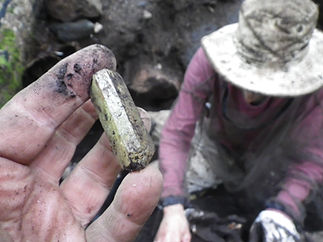


Explore the essential rules and regulations around Ontario rockhounding with this comprehensive guide from Dark Star Crystal Mines. Ontario rockhounding offers incredible opportunities to discover crystals, minerals, and gemstones — but understanding the legal framework is key to collecting responsibly. From Crown land access and mineral claim restrictions to provincial parks regulations and private property permissions, the rules for Ontario rockhounding protect both collectors and natural resources. Whether you’re a beginner or experienced rockhound, this guide explains how to stay compliant, ethical, and environmentally responsible while enjoying rock and mineral collecting across Ontario.
Ontario Rockhounding Rules & Regulations: Complete Guide
Overview of Ontario Rockhounding and Its Legal Responsibilities
Rock and mineral collecting in Ontario — commonly known as Ontario rockhounding — is also referred to as amateur geology. It is a rewarding outdoor activity that carries important legal and ethical responsibilities.
This article outlines how rockhounding in Ontario evolved from the 1950s hobby boom, peaked in mass appeal during the 1970s, declined with the rise of the personal computer era, and re-emerged in a more regulated and research-driven form today. It also explains the rules for Ontario rockhounds and the situation that led to their implementation, how to ensure you are legally collecting, and how the CCFMS Code of Ethics and provincial regulation shape modern practice.
Anyone planning to collect on the Dark Star claims must read and understand the rules for Ontario rockhounding prior to their first visit, practice them while on site, and continue applying them thereafter. Upon arrival at Dark Star Crystal Mines, all participants sign a waiver confirming they understand the applicable code of ethics and provincial regulations before beginning their day of supervised learning and amateur extraction.
Bottom line: consider yourself a student for the day. You will learn from us — and sometimes we will learn from you. You assist with assessment work, develop skills, and leave with what you find as an amateur collector.
Table of Contents
-
Overview of Ontario Rockhounding and Its Legal Responsibilities
-
Rockhounding popularity across the world
-
The History and Evolution of Rockhounding in Ontario
-
Emergence of the CCFMS Code of Ethics
-
Digital Influence on Ontario Rockhounding Trends
-
Modern Skills and Practices for Ontario Rockhounds
-
Education and Access in Ontario Rockhounding
-
Ontario Rockhounding Laws and Rules Under the Mining Act
-
Rockhounding at Dark Star Crystal Mines: Supervised Learning
-
Ethical and Responsible Rockhounding in Ontario
-
Conclusion: Preserving Ontario Rockhounding for Future Generations
Rockhounding Popularity across the World
Countries with the highest proportion of amateur rockhounds are primarily concentrated in regions with extensive public lands, diverse geological formations, and a strong culture of outdoor recreation. The United States, Canada, Australia, and New Zealand are leading nations in this hobby
.
Top Countries for Amateur Rockhounds:
-
United States: The U.S. has a very high concentration of rockhounds, fueled by widespread "rock and gem" clubs and vast, accessible public lands in the West. Popular areas include Arizona, California, Utah, and Oregon, which offer diverse, accessible locations for collecting.
-
Canada: Rockhounding is immensely popular, particularly in Ontario (notably in the Bancroft area, known as the "mineral capital of Canada") and British Columbia, which are rich in diverse, untapped geological sites.
-
Australia: Known as "fossicking" locally, the hobby is popular due to the continent's extensive, largely unexplored, and diverse mineral deposits, especially in regions like Queensland.
-
New Zealand: The country’s intense tectonic history has brought rare minerals to the surface, particularly in the Nelson mineral belt, attracting many enthusiasts.
-
Germany & Europe: Popular, particularly along the Rhine region and in the Alps for specialized collecting.
-
South Africa: Known for a strong local "klip lekker" (stone licker) culture.
Key drivers for high hobbyist proportions in these countries include accessible public land for collecting, along with a strong, organized community of local clubs.
The History and Evolution of Rockhounding in Ontario
1950s: Early Hobby Years and Club-Based Learning
In the 1950s, organized rock and mineral enthusiasm was present in Ontario. Clubs such as the Walker Mineralogical Club had already formed by the late 1930s. However, participation was smaller and less formally documented. Today the Walker club is a bit like Ontario’s “mother club,” with a strong connection to geology at U of T and many highly successful and experienced names in the rockhound world.
Rockhounding was largely:
-
Club-based
-
Mentor-driven
-
Field-oriented
-
Informal in regulation
Collectors relied heavily on hand lenses, streak plates, hardness tests, and word-of-mouth knowledge. The hobby was community-driven and built around in-person learning. at the time clubs did more than just facilitate outings.
1960s: Expansion of Clubs and Formation of the CCFMS
By the early 1960s, organized Ontario rockhounding grew rapidly:
-
The Bancroft Rockhound Gemboree began in 1963 with roughly two dozen organizers.
-
The Niagara Peninsula Geological Society was founded in 1962.
-
Field trips and mineral shows became more structured.
Interest grew steadily through the decade, culminating in the founding of the Central Canadian Federation of Mineralogical Societies (CCFMS) in 1969. This federation formalized ethical guidelines and united clubs across Ontario, Manitoba, and Québec.
1970s: Peak Popularity and Rock Collecting Boom
The 1970s marked the golden era of the Ontario rockhound. Worldwide the popularity increased in proportion to world surges in rock and mineral collecting. The decade was characterized by active club participation, rise of specialized literature, and adaptation to economic challenges like the energy crisis. Monthly meetings often packed over 100 people, drawing families, youth, and collectors to learn about geology, lapidary techniques, and minerals.
The energy crisis altered travel, prompting local site sharing. Rockhounds became more focused on cutting and polishing minerals at home.
The great rock and mineral show in Tucson mirrors Ontario’s embrace of rockhounding. Attendance and participation blossomed, and by the 1970s the Tucson Gem & Mineral Show drew exhibitors from across North America and beyond.
Throughout the 1970s in Ontario, rockhounding competed with:
-
Fishing
-
Hunting
-
Camping
-
Amateur astronomy
Fewer land-use restrictions, more accessible pits, and abundant untouched collecting areas allowed significant fieldwork. However, over exploitation highlighted the need for ethical standards. The CCFMS Code of Ethics, adopted in 1969, began shaping responsible collector behavior.
Emergence of the CCFMS Code of Ethics
The CCFMS Code of Ethics was adopted in response to irresponsible collecting that caused land closures and reduced access. Core principles include:
Property Rights
-
Never collect on private land without permission.
-
Respect active mining claims.
-
Follow all rules for Ontario rockhounds.
Environmental Responsibility
-
Leave sites clean.
-
Fill excavation holes unless directed otherwise.
-
Protect water sources and wildlife.
Safety and Respect
-
No firearms or explosives.
-
Respect gates, fences, and posted signs.
Responsible Collecting
-
Take only what you can reasonably use.
-
Avoid unnecessary destruction.
Ethical standards today are higher than in the 1970s, with social pressures and online accountability reinforcing responsible behavior.
Digital Influence on Ontario Rockhounding Trends
Decline in Youth Participation and Club Membership
The 1980s–1990s brought the rise of personal computers, video games, cable TV, and early internet forums. Rockhounding shifted from competing with outdoor hobbies to competing with indoor digital entertainment. Clubs experienced aging memberships and reduced youth participation, causing overall declines in casual mass appeal.
Rise, Fall, and Revival of Rock Tumblers
Rock tumblers rose to popularity in the 1950s and reached their peak during the 1960s and 1970s, paralleling the golden age of amateur geology and Ontario rockhounding. It’s a niche interest that has captivated mainly rockhounds whose interest is about the “pretties”, but conversely some highly competent rockhounds also enjoy the hobby. As we believe everyone has different reasons why they love rockhounding, none more or less legitimate than any other. The popularity of the rock tumbler is a separate way to look at the popularity of rockhounding.
Post-war prosperity, suburban basements, and a strong do-it-yourself culture made home lapidary equipment widely accessible. Families joined mineral clubs, attended gem shows, and polished agate, jasper, and quartz collected on weekend field trips. Lapidary along with rock tumblers also addressed the cost of travel which in the 70s OPEC) had a limiting effect on long distance rockhounding. Tumblers became common household hobby machines, often given as gifts to children and used as entry points into geology. With those niche interests you could still sit at home and be a rockhound of sorts. Lapidary and tumblers provided a tangible reward for field collecting, transforming rough stones into glossy specimens and reinforcing the creative, educational spirit of the era.
During the 1980s and 1990s, however, the popularity of rock tumblers declined. The rise of personal computers, video games, cable television, and other indoor digital entertainment shifted attention away from hands-on craft hobbies. Rock clubs saw aging memberships, fewer young participants entered the field, and many local lapidary supply shops closed. While tumblers never disappeared entirely, they became more niche, used primarily by dedicated hobbyists rather than families and casual collectors. This period mirrored the broader contraction in mass participation within rockhounding.
Beginning in the 2000s, rock tumblers experienced a revival driven by the internet and later social media. Online tutorials, e-commerce grit suppliers, YouTube demonstrations, and visually compelling “before-and-after” polishing videos introduced a new generation to the hobby. Today’s resurgence is more decentralized and digitally connected than the club-centered boom of the 1970s, with many beginners learning independently rather than through formal organizations. Although the scale of participation may not match its peak decades, the rock tumbler remains one of the most accessible gateways into mineral collecting, bridging outdoor discovery with creative home craftsmanship and to me it indicates a casual hobby base that is required to support the bigger interest in geology and prospecting. Everybody begins somewhere.
Computers, Internet, and Social Media Influence
The 2000s saw a resurgence of interest in rockhounding due to:
-
Online mineral databases (e.g., mindat.org)
-
Digital geological maps and claim verification tools (e.g., MLAS)
-
GPS, portable UV technology, and mineral identification apps
Modern rockhounding is research-driven, globally connected, and digitally informed. Social media, however, introduces risks such as site overexposure, trespass, and viral rushes to fragile locations.
Modern Skills and Practices for Ontario Rockhounds
Technical Skills and Field Competency: 1970s vs Today
1970s Strengths
-
Practical rock-breaking skills
-
Mentor-based learning
-
Access to less depleted ground
Modern Strengths
-
Digital mapping and claim verification
-
Better understanding of the Mining Act
-
Stronger environmental awareness
-
A niche segment of the rockhound world who are crystal enthusiasts for metaphysical purposes. They are less present in the field and more apt to buy specimens from a local metaphysics shop.
The biggest difference is access and context — not intelligence or passion. We at Dark Star Crystal Mines argue that access to good collecting sites improves with education and motivation. The Bancroft rockhounding sites are amongst the best in the country.
Motivation improves with education because it allows a rockhound to see what’s really possible in Ontario – it allows Ontario rockhounds to know the possibilities as opposed to just dream of them. It’s not about diminished supply, the province is chock full of minerals, its about diminished ability to see outside the box. Typically the rockhound of 2026 will just revisit those same old places that they’ve always gone as they don’t know or don’t have the energy to go elsewhere. We say that a geological map and some passion can work wonders for your collecting ability. We aim at dark star to teach you how to become independent of the tired old places and to expand Ontario’s rockhound collecting possibilities. Competency today often depends on access and education rather than passion or intelligence.
Education and Access in Ontario Rockhounding
Education allows rockhounds to explore beyond the traditional, heavily collected sites in Ontario. Tools like geological maps combined with mentoring can greatly expand field opportunities and success.
Ontario Rockhounding Laws and Rules Under the Mining Act
Definition of Amateur Rockhounding
Ontario rockhounding is defined as hobby mineral collecting for personal enjoyment, education, research, museum display, or swapping. It is explicitly non-commercial.
Permitted Tools and Equipment
Collectors may only use hand tools such as hammers, chisels, and shovels. Mechanical tools or explosives are prohibited.
Collection Limits and Location Restrictions
-
Collect only what one person can carry from a single site per year.
-
Crown Land: Generally permitted but active claims must be verified.
-
Private Land: Explicit permission required.
-
Parks and Protected Areas: Collecting prohibited.
Enforcement Discretion and Compliance
The Ministry of Mines may choose not to issue penalties if collectors follow hobby guidelines, respect claim holders, and act responsibly.
Rockhounding at Dark Star Crystal Mines: Supervised Learning
Educational and Safety Oversight
Dark Star Crystal Mines provides structured, supervised mineral collecting for both amateurs and experienced rockhounds, with coaching in geological context, safety, and ethical field conduct.
Access to Claims and Guided Collecting
Participants assist in assessment work and enjoy guided access to mineral-rich claims. Holes may remain open during the assessment phase per provincial law, and are filled afterward.
Minimal Monetary Gain and Personal Value
Most finds are personally meaningful rather than commercially valuable. Minerals can be kept or swapped but not sold. It's said that "beauty is in the eye of the beholder", and so value is subjective as well. Mark cannot understand why I take the specimens that I do. He likes color and luster, I like perfection of form and scientific obscurity. Admittedly I also take home some junk, but I'm hoping for something better under the mud.
Ethical and Responsible Rockhounding in Ontario
Modern Ethical Guidelines and Environmental Stewardship
Ontario rockhounds today are expected to:
-
Use hand tools only
-
Respect property and claims
-
Follow environmental stewardship principles
-
Limit collection to reasonable personal amounts
-
Verify land status before collecting
-
Collect legally under Mining Act guidelines
Avoiding Trouble
So just a brief case study of an issue that I once ran into with a toxic self-appointed internet policeman. Naturally rockhounds are eager to find the crystals, but they tend to sometimes let their eagerness exceed their prudence when they are planning an exciting trip. I typically use mindat.org to research the location that I am going and for the most part it lists landowner wishes etc. for private collecting sites.
For whatever reason in this one case I must have missed the wish of the landowner to not have campfires on the collecting site and myself and a friend stayed the night and then posted our experience on my youtube channel. Needless to say somebody pointed out our mistake (innocent) and included some pretty unpleasant threats. Point is that the whole situation arose from our missing the regulations for that property and then the person who pointed the problem out went on to diagnose other videos that I'd made and find trespassing fault that did not exist, made assumptions to back their claims etc. The long and short of it is, be careful what you post as there is a world of eager trolls out there who are quick and happy to tear you down and also make sure that when you are visiting the site you have your ducks in a row, you've got permission if needed and you understand what is expected. Often contacting a local club will put you in a better state of knowledge.
Keep in mind, deviation also brings heat down on the rockhound community as a whole and endangers the rights of everybody to collect, but remember, there are also those out there who will get a charge out of holding you to account on the most flimsy of assumptions, so post carefully and with an eye to how things can be perceived.
For your own interest I have included a snippet of what you can expect from a rockhound policeman if you deviate (this was from about 10 years ago and the troll is still at it with his assumption - cooking up mischief in a very unpleasant way. Best thing is a polite and respectful conversation if things appear off-side.
"I know the site well enough to conclude from your video, you two were there with a campfire and I presume you camped there, the same as you have on other properties like Titanite Hill." (we were there with a campfire, but not fully conversant with the rules that were at the time not very well known as we had camped there with a club (from which this critic comes) some short time back so we just assumed that nothing had changed)
"We will make him aware of your video and therefore who you are. This is not to be vindictive to you but to ensure a classic site is not lost by assuring him collectors are there to assist him and self-police inappropriate behaviour on his property." (good sentiments in wishing to protect the rights of rockhounds, but the threat revealed that it was more about ego and control.)
"P.S. I am not even going to comment on the ***** Mine shaft access on a closed site – poor judgement, evener poorer judgement to publish it." (This guy was not aware of the site - he was guessing and ironically, some of the most ardent people to hold others to account have more skeletons in their own closet than can fill a shipping container). I had been visiting the site in question with permission from the land owner some 35 years back, before this person was probably even in the hobby.
FAQ: Rules for Ontario Rockhounding
Q1: Are there limits to how much I can collect?
A1: Yes. Collectors should only take what one person can reasonably carry from a single site per year. This ensures sustainable and responsible use of mineral resources.
Q2: Can I collect rocks in parks or protected areas?
A2: No. Collecting in provincial or national parks and other protected areas is strictly prohibited. Both the Provincial government and the CCFMS code of ethics make this plain.
Q3: How has rockhounding changed since the 1950s?
A3: Ontario rockhounding evolved from small, club-based, mentor-driven activities in the 1950s to a golden age in the 1970s with mass participation. Interest declined in the 1980s–1990s due to digital entertainment but has revived in the 2000s with online tools, social media, and research-focused collecting. Over time rockhounding in Ontario has become more structured and ethical with the imposition of the CCFMS code of ethics and Provincial regulation.
Q4: What is the CCFMS Code of Ethics?
A4: The Central Canadian Federation of Mineralogical Societies (CCFMS) Code of Ethics sets guidelines for property respect, environmental responsibility, safety, and responsible collecting. It ensures collectors act legally and ethically. Essentially they are the informal rules for rockhounding in Ontario.
Q5: How can I ensure I am collecting legally in Ontario?
A5: Verify land ownership and claims, use only hand tools, limit collection to personal use, follow the Mining Act, and adhere to ethical guidelines like those in the CCFMS Code of Ethics.
Q6: What makes supervised sites like Dark Star Crystal Mines different?
A6: Supervised sites provide guided collecting with coaching in geological context, safety, ethical field conduct, and hands-on experience. Collectors sign waivers and learn responsible techniques while enjoying access to mineral-rich claims and we ensure that you are operating within the rules for Ontario rockhounding.
Q7: Why is responsible rockhounding important?
A7: Responsible collecting preserves access to mineral sites, protects the environment, maintains the hobby’s integrity, and ensures that future generations can enjoy Ontario’s rich geological heritage.
Conclusion: Preserving Ontario Rockhounding for Future Generations
By following the rules and regulations around Ontario rockhounding, hobbyists play a vital role in protecting both the land and the legacy of amateur geology. Adhering to the CCFMS Code of Ethics, respecting property rights, and practicing responsible collecting ensures that mineral-rich sites remain accessible and sustainable for years to come.
Modern Ontario rockhounds benefit from decades of accumulated knowledge, digital tools, and ethical guidelines that guide safe, environmentally conscious, and legally compliant collecting.
Whether exploring Crown land, private claims, or supervised sites like Dark Star Crystal Mines, responsible collectors help maintain the hobby’s integrity, preserve geological heritage, and inspire future generations of rockhounds. Following these rules not only safeguards today’s collecting opportunities but also guarantees that Ontario’s rich mineral landscapes remain available for educational, recreational, and scientific enjoyment well into the future.


Below: follow principles of environmental stewardship
Above: You are limited in how much you can extract from a claim as an amateur prospector.
Above: Learning and understanding are much more easy now days with the internet, but a rockhound must translate theory into practical.
Top countries for amatuer geology tend to be those with a larger disposable income and the opportunity to practice that hobby because of large amounts of crown land and favorable mineral deposition.

Above: Faceting, tumbling and lapidary arts really blossomed in the 1970s


Left: there are rules and ethics around rockhounding in Ontario. Not following the rules can have consequences for yourself or others.

Left: Amazonite from the Smart Mine. The mine consists of a swarm of carbonatite fissures that have been tapped over the years for apatite and now is a place frequently visited by Ontario rockhounds. Most of the easily accessed fissures have been tapped, though in the old workings there is said to be zircon that was discarded in the search for apatite.