


Rockhounding in Ontario is a world-class adventure for collectors and amateur geologists alike, offering access to the mineral-rich Canadian Shield and some of the best rockhounding locations in Canada. From the famous Bancroft area—known as Ontario’s “Mineral Capital of Canada”—to Thunder Bay’s amethyst mines and the agate-strewn shores of Lake Superior, Ontario rockhounding sites produce quartz crystals, feldspar, apatite, titanite, calcite, and rare minerals. Whether you're searching for crystals, exploring road cuts, or visiting fee-dig mines, rockhounding in Ontario provides diverse geology, accessible collecting areas, and unforgettable mineral finds for beginners and experienced collectors alike.


Background: Walker Mineralogical Club (Toronto) prepare for a quarry trip.
Left: Sphalerite cluster found on the Quarry trip
Best Places for Rockhounding in Ontario: Best Sites, Minerals & Tips
Ontario is a premier destination for rockhounding and mineral collecting, boasting some of Canada’s most diverse geology, rich mining history, and spectacular natural landscapes. From the ancient metamorphic rocks of the Grenville Province to the volcanic flows of Thunder Bay and the sedimentary formations of Southern Ontario, the province offers unparalleled opportunities to discover gemstones, crystals, and rare minerals. In the following article I will reveal the best places for rockhounding in Ontario.
Whether you’re searching for Lake Superior agates, amethyst, quartz, feldspar, fluorite, or collectible pegmatite minerals, Ontario’s historic mines, road cuts, quarries, and riverbeds provide exciting locations for both amateur and experienced collectors. This comprehensive guide highlights the best rockhounding areas across Ontario, the minerals you can find in each region, and practical tips to ensure safe, responsible, and successful collecting adventures.
Rockhounding in Ontario: An Overview
Ontario is a treasure trove for rockhounds thanks to its:
-
Varied geology – from Archean gneiss and granitoid batholiths to Paleozoic limestones. From central and Northern Ontario the Canadian shield stretches deep under North America and as far east as Greenland. It explains the mineral bounty shared by both places, however, the Canadian Shield is enormous and it helps to know the exact location of the best places to rockhound. Begin by identifying the region and from there use mindat.org to locate the best places for rockhounding.
-
Mining history – Fortunately, the best places for rockhounding are often paired with a phenomenal atmosphere of past mining history. There is a great plethora of mining infrastructure, the ore carts and head frames located in Historic Cobalt and in the forgotten mines around Sudbury.
-
Glacial action – exposing and depositing minerals like agates and quartz.
Some would suggest accessibility, or lack of it plays a part in rockhounding in Ontario. Southern Ontario and the near-north are well provided with roads. On a side note, cave explorers say that 90 % of Ontario’s caves are within 200 feet of a road. Translate that to mineral deposits and know the tendency of people to not travel too far into rugged terrain. It therefore stands to reason that as roads decrease in a northerly direction, the mineral deposits remain in a similar density, discoveries simply being linked to access.
Admittedly, professional geology is not so based around roads as it is aerial surveys, so the connection between roads and amateurs is a stronger one. Professional geologists plot their searches from a computer with data that looks more mathematical than mineralogical. For amateurs, rockhounding in Ontario is tied to such guidance as mindat.org and its maps. Amateurs plot their outings and prospecting according to maps, access and travel time.
Table of Contents
-
Introduction: The Ultimate Guide to Rockhounding in Ontario
-
Rockhounding in Ontario: An Overview
-
Cobalt, Ontario: Silver & Gem Minerals
-
Sudbury Area: Nickel-Copper Ores & Unique Minerals
-
Thunder Bay: Lake Superior Agates & Granitic Riches
-
Wilberforce Gem Pit: Quartz, Feldspar & More
-
Rockhounding in Bancroft: Canada's Mineral Capital
-
Rockhounding in the Tory Hill area
-
Madoc: Fluorite, Calcite & Barite
-
Agate Island & the Shores of Lake Superior
-
Quarries of Southern Ontario
-
Eastern Ontario Rockhounding Areas
-
Rockhounding Tips for All Sites
-
Discover the Best Rockhounding Experiences in Ontario
-
FAQ Best places for Rockhounding in Ontario
This guide covers the top regions including Cobalt, Sudbury area, Thunder Bay, Wilberforce, Bancroft, Madoc, Agate Island, Lake Superior shores, and Southern Ontario quarries, Eastern Ontario.
Cobalt, Ontario: Silver & Gem Minerals
Rockhounding in Cobalt, Ontario: A Historic Silver Mining Town
Few places in Ontario carry the raw mining legacy of Cobalt. Founded after the 1903 discovery of exceptionally rich native silver veins during railway construction, Cobalt quickly became one of the most famous silver mining camps in the world. By the early 1900s, it was producing staggering amounts of high-grade silver from narrow veins hosted in ancient sedimentary and volcanic rocks of the Canadian Shield. Today, the town is dotted with historic head frames, mine shafts, tailings piles, and abandoned workings—silent reminders of its boom town past.
There are few places for rockhounding in Ontario that combine these legacy sites and yet continue to attract mineral collectors and geology enthusiasts in such numbers. In cobalt there are opportunities to find native silver, cobalt arsenides, and vibrant erythrite staining on weathered rock—while also revealing details of the old mining infrastructure, the pipes, adits, and old mining trains and elevators tipped into the bush and forgotten. There is much about Ontario's lost mines that can be discovered here and if it is metals that you are looking for, Cobalt and Temagami are amongst the best places for rockhounding those minerals.
Geology
Cobalt sits in the Proterozoic Cobalt Embayment, a mineral-rich sedimentary basin. This region is famous for its silver-cobalt arsenide deposits.
What You Can Find
-
Native silver
-
Cobaltite & erythrite (cobalt “rose” mineral)
-
Nickeline
-
Calcite & quartz specimens
Rockhounding Tips
-
Focus around old mine dumps and historical sites (ensure permission!)
-
Use a sturdy rock hammer and safety gear
-
Look for weathered arsenide crystals in shale
Sudbury Area: Nickel-Copper Ores & Unique Minerals
Rockhounding in the Sudbury Area: Impact Geology & Mining Legacy
The Sudbury region is one of the most geologically unique and historically significant mining districts in the world. Formed by a massive meteorite impact nearly 1.85 billion years ago, the Sudbury Basin became rich in nickel, copper, and platinum-group elements—resources that helped fuel industrial growth throughout the 20th century.
Mining began in the late 1800s and quickly transformed Sudbury into a global leader in nickel production. Today, while active mining continues, the landscape still holds remnants of its long history, including historic workings and old tailings areas where mineralized rock was once processed. For those who are interested in rockhounding in Ontario and specifically Sudbury, certain accessible and permitted areas are amongst the best places for rockhounding in Ontario, specifically if you are interested in base metals and sulfides such as chalcopyrite, pentlandite, pyrrhotite, quartz, and occasionally gahnite or other accessory minerals. As always, collectors should ensure they have permission, respect posted boundaries, and exercise caution around any historic mine sites or tailings.
Geology
A 10–15 km wide meteorite struck the Sudbury area 1.85 billion years ago, creating one of the world's oldest and largest impact craters. The cataclysmic event blasted a 200 km wide crater, melted kilometers of crust. The impact triggered a, "shock-metamorphic" event that allowed metal-rich magma from deep within the earth to rise, forming the rich mineral deposits (nickel, copper, platinum, palladium). While the meteor provided the massive energy needed to melt and concentrate the minerals, scientific analysis shows the metal itself is of terrestrial, not extraterrestrial, origin. The Sudbury area features "Breccia" (rock broken and melted by the blast) and shatter cones, which are unique, conical fractures in bedrock caused by high-velocity impact. The explosion was so powerful that debris from the impact (fallback breccia) has been found as far as 500 miles away.
Best rockhounding spots near Sudbury, Ontario, include searching for Sudbury Breccia and shatter cones along Highway 144, hunting for quartz and gold in the Windy Lake area, and searching for puddingstone along the shores of Lake Huron near Desbarats. The region’s unique meteorite impact site creates excellent opportunities for collecting, with gems and minerals found throughout the area.
Best places for rockhounding near Sudbury
-
Windy Lake: Known for finding various types of quartz and other geological samples.
-
Rydal Bank: A popular spot for collecting amethyst, quartz, agate, and feldspar.
-
Mica Bay: Known for its challenging but rewarding rocky outcrops with unique minerals.
-
Lake Huron Shores (near Desbarats): Excellent for collecting colorful Puddingstone, Jasper, and quartzite along the shoreline.
-
St. Joseph Island: Renowned for limestone deposits containing fossils like trilobites.
-
River Valley: Known for garnet-bearing schist, particularly along road cuts.
-
Dynamic Earth (Sudbury): Offers an opportunity to pan for gold and learn about the local geological history.
What You Can Find
-
Pentlandite & chalcopyrite (nickel-copper sulfides)
-
Pyrrhotite
-
Quartz and amethyst often in the area's veins
-
Feldspar
-
Gahnite & spinel
-
Pudding stone, A conglomerate rock with red jasper, quartz, and other minerals in a white matrix.
Best Rockhounding Techniques
-
Visit tailings, outcrops, and creek beds around mining sites
-
Use magnetometer or metal detector for sulfide ores
-
Always follow safety and access rules on private land
⛰️ 3. Thunder Bay: Lake Superior Agates & Granitic Riches
Rockhounding in Thunder Bay: Amethyst Country & Northern Pegmatites
Thunder Bay is internationally known for its vibrant Ontario amethyst, a gemstone that has been mined commercially in the region since the mid-20th century. Hosted in ancient volcanic rocks of the Superior Province, Thunder Bay amethyst forms in fractures and cavities within basalt flows, often displaying deep purple hues with flashes of red hematite inclusions unique to the area. The region’s mining heritage includes several well-known amethyst operations that continue to attract collectors and tourists alike. Beyond the famous amethyst deposits, the broader district tells an even bigger geological story. To the north, rare-element pegmatites associated with granitic intrusions host minerals enriched in lithium, tantalum, niobium, and other rare earth elements. The area has also drawn attention for its emerald occurrence near the eastern margins of the region, where chromium-rich geological conditions allowed beryl to form in emerald-bearing zones. Together, Thunder Bay offers a remarkable blend of gemstone mining history, modern mineral exploration, and exceptional rockhounding opportunities across northwestern Ontario.
Geology
Thunder Bay showcases the ancient Superior Province of the Canadian Shield—hard igneous and metamorphic rocks with glacial deposits rich in Lake Superior agates.
What You Can Find
-
Lake Superior agates (banded jasper)
-
Quartz crystals
-
Feldspar & garnets
-
Basalt flow amygdules
Techniques for Success
-
Scan shorelines and gravel bars after storms
-
Use a sifting screen to find agates in pebble deposits
-
Pan along beaches for tumbled stones
🌲 4. Wilberforce Gem Pit: Quartz, Feldspar & More
Rockhounding in Wilberforce: Grenville Pegmatites & Classic Collecting Sites
Wilberforce sits within the mineral-rich Grenville Province, one of Ontario’s most productive geological regions for pegmatite-hosted minerals. Formed during intense mountain-building events over a billion years ago, the area’s metamorphic rocks and granitic pegmatites produced significant deposits of feldspar, mica, quartz, apatite, and occasional beryl.
In the late 19th and early 20th centuries, small-scale mining operations extracted feldspar and mica for use in ceramics, glass, and electrical insulation, leaving behind scattered historic pits and workings that still define the landscape.
Today, Wilberforce is best known among rockhounds for its accessible collecting sites and crystal-bearing pegmatite exposures, where patient splitting and surface searching can reveal smoky quartz, feldspar crystals, and other classic Grenville minerals. Especially unique to the Wilberforce area are the two deposits controlled by the Hastings east municipality; the Schickler Occurrence and the Desmont Mine. Rockhounds sign wavers for those locations at the general store in town.
Mineral wise, the area around Wilberforce is known for its beautifully colored diopside and tremolite crystals, the presence of fluor-richterite is signature to the region, often found at titanite hill. Fluor-richterite is distinguished from other amphiboles by its slender black crystals that appear to be almost diamond shaped in cross section and they tend to cleave with near perfection down the center of their prisms - this in contrast to a recent mineral found in the bear Lake area - ferri - fluoro - katophorite. Apatite of exceptional color and clarity can be found just outside wilberforce at the Trilliumite mine. It is extracted and faceted into highly sought collector gemstones. Currently the Trilliumite Mine is under private ownership and rumored to be working.
Its long mining history and approachable terrain make Wilberforce a favourite destination for both beginner and experienced Ontario mineral collectors. The Township runs 2 official sites, the Desmont Mine and the Schickler Occurrence. Sign-up and get directions at the general store in town. Greenmantle farms offers a spectacular tour of wild crystals – an eco tour so you can learn, but not take.
Geology
Part of the Grenville Province, Wilberforce exposes metamorphic and pegmatitic rocks that yield excellent mineral specimens.
What You Can Find
-
Clear & smoky quartz
-
Feldspar crystals
-
Mica & schist
-
Occasional beryl
Tips for Rockhounding
-
Bring chisels to split pegmatite veins
-
Look in crevices where crystals weather out
-
Weathered rock piles often host showy piece
Rockhounding in Bancroft: Canada’s Mineral Capital
Bancroft’s mining legacy is unique in Canada for its extraordinary variety of minerals. It was for that reason that it has survived multiple boom and bust cycles where single mineral communities have collapsed over time. Since the late 1800s, small-scale mining and prospecting uncovered feldspar, mica, apatite, garnet, beryl, titanite, and rare sodalite varieties like hackmanite. Unlike many industrial mining towns, much of Bancroft’s mineral wealth came from hand-dug pegmatite pockets, creating museum-quality specimens and fueling its reputation as the “Mineral Capital of Canada.” Today, roadside pegmatite exposures, abandoned feldspar pits, and historic quarries allow rockhounds to continue exploring and collecting the same vibrant crystals that drew miners and collectors over a century ago.
Bancroft is widely recognized as the “Mineral Capital of Canada,” a title earned through its extraordinary diversity of mineral deposits and long-standing mining history. Located within the Grenville Geological Province, the region’s ancient metamorphic rocks and granite pegmatites host an impressive array of minerals, including apatite, titanite, feldspar, mica, fluorapatite, hackmanite (tenebrescent sodalite), beryl, and garnet.
In short, while rockhounding is a distinctive niche that gives Bancroft a unique draw in the tourism market, cottaging and general outdoor recreation bring in broader and often overlapping visitor traffic. In the recent past it seemed that rockhounding had fallen by the way-side and cottaging had become the focus, but I believe there was a realization of greater economic benefit by combining the two. Together they support local businesses and help diversify the region’s tourism revenue. Many visitors come for mixed experiences: a cottaging getaway plus a rockhounding day trip or attendance at the Gemboree. Rockhounding events like the Gemboree can extend stays and increase spending, benefiting the broader tourism economy beyond the niche rock-obsessed crowd.
Mining activity in the late 1800s and early 1900s focused on feldspar, mica, and apatite, while mid-20th-century exploration targeted uranium, leaving behind numerous historic pits and prospects that still attract collectors today.
Bancroft’s well-known rockhounding sites include former feldspar and uranium workings, roadside pegmatite exposures, and organized collecting areas that have made the region famous among mineral enthusiasts e.g. Princess sodalite mine. Its combination of geological complexity, vibrant crystal specimens, and accessible collecting opportunities continues to make Bancroft a premier destination for Ontario rockhounds.
One of the better‑known historic mines in this part of Ontario is the Madawaska (formerly Faraday) Mine. It was just one of many uranium mines in the area. Originally the mine was developed as a uranium producer in the 1950s, it became the area’s most productive uranium operation, yielding millions of pounds of uranium oxide before final closure in the early 1980s. The surrounding pegmatite‑hosted zones also produced collector‑grade crystals including calcite, ilmenite, uranophane, and rare kainosite‑(Y)—minerals that are now featured in museum collections and highly prized by collectors.
Geology
Bancroft is known for its granitic pegmatites, skarns and vein dyke deposits —forming some of the most impressive mineral specimens in Ontario. If you are specifically looking for radioactives, the Bancroft area certainly has the tailings and abandoned mines to make it the best place for rockhounding for radioactives in Ontario.
What You Can Find
-
Apatite & titanite
-
Feldspar & mica
-
Hackmanite (tenebrescent sodalite)
-
Garnet, beryl, epidote
Rockhounding Best Practices
-
Join the annual Mineral Days event
-
Attend the Rockhound Gemboree – largest mineral show in Canada
-
Visit roadside quarries and exposed pegmatite zones
-
Respect private property and posted signs
Rockhounding in the Tory Hill area
The Tory Hill area of Ontario is one of the premier rockhounding regions in Canada, attracting collectors with its remarkable abundance of apatite, titanite, zircon, amphiboles, and rare calc-silicate minerals. The region is underlain by highly metamorphosed marbles, gneisses, pegmatites, and carbonatite-related vein systems formed more than a billion years ago. These rocks were subjected to intense heat, pressure, and fluid activity during the Grenville Orogeny, creating the ideal geological environment for exceptionally large crystals to grow. There is also an amazing crystal diversity in this area with rare earths tiniting many a crystal and even amethyst and smokey Quartz appearing.
Around Tory Hill, calcite-rich vein-dikes and skarn zones became natural pockets where minerals such as fluorapatite, titanite, hornblende, diopside, and zircon crystallized in coarse masses and open fissures that today are highly sought after by collectors. Another point in favor of this area is the density of collecting sites packed in close proximity. Much as Bear Lake is now out of bounds, Tory Hill is free (although increasingly picked over) and Dark Star Crystal mines is the premiere destination with at times world class crystals and a knowledgeable staff to guide and educate you. Admittedly the Dark star properties are for authentic rockhounding and it is not just a pick and grab location - you must dig, but the rewards are in proportion to skill and effort. Check here for a pay to dig comparison and here for greater detail on the Dark Star experience. (Mark and I own the mine)
Among the best-known localities is the historic Saranac zircon occurrence, famous for its small but often sharply formed zircon crystals hosted in pegmatitic and nepheline-bearing rocks. The occurrence reflects the unusual chemistry of the Tory Hill intrusive systems, where silica-poor but zirconium-rich magmas concentrated rare accessory minerals. Nearby, Titanite Hill has become legendary among Ontario rockhounds for its lustrous wedge-shaped titanite crystals weathering from calcite carbonatite vein-dikes. Many collectors search the forest soils and exposed fissures where freeze-thaw cycles gradually release titanite from decomposed calcite veins.
About 3 kilometers away down a relatively impassable road are the historic Bear Lake Diggings. They have produced some of the most impressive apatite and titanite specimens ever found in the Bancroft region, including large green fluorapatite crystals associated with amphibole and calcite. A Bear Lake provinance is highly valued in leading mineral collections across the world. The Bear Lake system is geologically connected to the broader network of carbonatite and calc-silicate dikes that extend throughout the Tory Hill area.
Modern collectors continue exploring this mineral-rich terrain at Dark Star Crystal Mines, where active digging areas expose fresh sections of the same ancient geological structures responsible for the classic Tory Hill finds. The claims adjacent to Bear Lake contain pyroxene-rich “high temperature fissures” yielding titanite, while lower-temperature calcite-rich zones can host large apatite crystals and amphiboles. The combination of marble host rocks, alkaline intrusions, pegmatitic fluids, and repeated metamorphic events created a uniquely mineralized environment rarely matched elsewhere in Ontario. For rockhounds, Tory Hill offers more than specimen collecting — it provides a direct look into the deep geological processes that shaped the Grenville Province and produced some of Canada’s most iconic mineral localities.
Rockhounding in Madoc: Fluorite Veins & the Madoc Fissure
Madoc sits along a major structural feature often referred to as the Madoc Fissure, a prominent fracture system that cuts through the Paleozoic limestone and dolostone of the region. This deep-seated faulting allowed mineral-rich hydrothermal fluids to circulate through the bedrock, depositing colorful veins of fluorite, calcite, barite, galena, and quartz.
During the late 1800s and early 1900s, small-scale mining operations targeted these vein deposits, particularly fluorite and associated minerals, leaving behind historic pits and trenches that still define parts of the landscape. Today, Madoc is best known among Ontario rockhounds for its vein-style mineralization, where careful searching of old workings and exposed limestone can yield attractive purple and green fluorite, well-formed calcite crystals, and barite specimens.
Its combination of structural geology and visible vein systems makes Madoc a fascinating stop for those exploring southern Ontario’s mineral heritage. Unfortunately access in this area is a little limited so be sure to ask permission at any place you hope to visit. A quite clever sentence in Helen Peterson’s book Peterson Guide to Mineral Collecting Bancroft area” explains the local attitude to rockhounds, “Some sites are owned by hostile farmers, and while buckshot is highly mineralized, it is not the intention of this guide that you should collect any”.
The Rogers Mine near Madoc is one of the better-known historic fluorite occurrences associated with the Madoc Fissure system. It sits upon a rocky knoll in the middle of a swamp. Developed in the late 19th to early 20th century, the mine targeted hydrothermal vein deposits cutting through the local limestone and dolostone, producing fluorite along with calcite, barite, galena, and minor sulfides. At 420 feet the deposit was still strongly yielding, but water broke through from the north and flooded the workings to within about 30 feet of the shaft entrances. Pumping could not keep up with the inflow. Today the mine sits abandoned on private property, its shafts capped by decaying concrete slabs. Several small veins above the mine have been opened by rockhounds.
Like many small operations in the region, it was worked intermittently and on a relatively modest scale, leaving behind trenches, shallow shafts, and scattered waste rock piles that reflect the vein-style mineralization typical of Madoc. For mineral collectors, the Rogers Mine became known for attractive purple and green fluorite specimens and well-formed calcite crystals found in fractured limestone host rock. Today, it stands as part of Madoc’s broader mining heritage, illustrating how structural faulting and fluid movement along the fissure system concentrated economically and aesthetically significant minerals in the area.
Geology
In the Paleozoic limestones near Madoc, hydrothermal fluids deposited colorful veins of fluorite and associated minerals.
What You Can Find
-
Purple & green fluorite
-
Calcite scalenohedrons
-
Barite rosettes
-
Quartz crystals
Techniques
-
Carefully chip into vein pockets
-
Use eye protection and gloves
-
Tag and label finds by location
Rockhounding on Agate Island & the Shores of Lake Superior: Home of the Lake Superior Agate
Agate Island and the surrounding shores of Lake Superior are legendary among rockhounds for producing the iconic Lake Superior agate, one of North America’s most sought-after gemstones. These agates formed over a billion years ago within gas cavities of ancient basalt lava flows associated with the Midcontinent Rift. Later, powerful glacial activity broke, transported, and polished them, concentrating the banded chalcedony nodules along beaches and gravel bars.
While there has never been large-scale mining of Lake Superior agates in the traditional sense, small commercial operations and lapidary collectors have long harvested specimens for cutting and jewelry. Today, the best-known rockhounding sites include exposed cobble beaches, storm-washed shorelines, river mouths, and offshore islands like Agate Island, where wave action continually reveals new material. Collectors search for translucent, finely banded agates displaying reds, oranges, and whites colored by iron inclusions—each one a small, water-polished piece of the Lake Superior basin’s volcanic history.
Along the shores of Lake Superior, particularly within the volcanic rocks of the Midcontinent Rift system, native copper occurs in basalt flows and associated conglomerates that are over one billion years old. This copper formed when hydrothermal fluids circulated through porous lava and fracture systems, depositing metallic copper in cavities, amygdules, and along flow contacts. Glacial activity later eroded and redistributed pieces of this copper, leaving water-worn nuggets and specimens scattered along beaches and within shoreline gravels.
While large-scale historic copper mining is more famously associated with Michigan’s Keweenaw Peninsula, native copper also occurs on the Canadian side of Lake Superior, where careful beach combing after storms can occasionally reveal small, heavy, metallic fragments mixed among basalt cobbles and agates. Collectors often look for pieces with a distinctive reddish metallic sheen, sometimes coated in green malachite or dark oxidation, making native copper another prized find along Lake Superior’s rugged shoreline.
“Yooperlites” (sometimes stylized as “Yöperolites”) are not a separate mineral species but a collector’s trade name for a rock that became popular because of its vivid fluorescence under ultraviolet light. Geologically, they are sodalite-rich syenite cobbles—an alkaline intrusive igneous rock composed largely of feldspar with the feldspathoid mineral sodalite dispersed throughout a coarse matrix. When exposed to long-wave UV light, the sodalite fluoresces bright orange to yellow, producing the dramatic glow that made these stones famous on Lake Superior beaches, particularly in Michigan’s Upper Peninsula and also along the Ontario shoreline.
The shores of Lake Superior in the Upper Peninsula are especially well known for Yooperlite hunting, with productive stretches near Ironwood, including Little Girls Point, and along the Keweenaw Peninsula. These regions contain abundant igneous material, and wave action concentrates the rounded cobbles along the beaches. For best results, collectors typically search at dusk or dawn, when the darker ambient light enhances the contrast between the beach and the glowing stones. Using a blue or UV flashlight, scan areas where waves have recently deposited rocks. Yooperlites usually appear as small, rounded gray pebbles in daylight—though some can be as large as a baseball—and may display fractures or mottled patterns that add character.
In ordinary light they resemble unremarkable gray to speckled syenite, but under UV illumination the sodalite responds due to trace activator elements, emitting visible fluorescence. Most examples are thought to be glacial erratics—rocks transported by ice from alkaline intrusive source regions within the Lake Superior basin and later rounded and polished by shoreline processes. While “Yooperlite” is a popularized name used by collectors, the fluorescence itself comes from sodalite within the syenite, and similar glowing material can be found anywhere sodalite-bearing syenite occurs.
Geology
These ancient shorelines and glacial deposits along Lake Superior are prime territory for Lake Superior agates and other beach gemstones.
What You Can Find
-
Agates with beautiful bands
-
Chalcedony & jasper
-
Tumbled quartz and feldspar
-
Petoskey-like stones in limestone pockets
Best Practices
-
Walk beaches after high wave events
-
Use water to help identify agates
-
Sifting along gravel shorelines
Rockhounding in Southern Ontario Quarries: Hamilton & Niagara Region
Southern Ontario’s quarries, particularly around the Hamilton and Niagara regions, offer a fascinating glimpse into Paleozoic sedimentary geology and a long history of mineral extraction. These areas are dominated by limestone, dolostone, and shale formations, which have been quarried for building stone, aggregate, and industrial uses since the 19th century.
Hydrothermal fluids and fracture systems within the bedrock created localized mineralization, producing calcite, dolomite, quartz veins, barite, and occasionally small geodes. The region’s quarries, including old limestone pits and abandoned extraction sites, are popular among rockhounds for collecting fossils, crystallized calcite, and occasional chalcedony nodules, especially in blasted rock piles where fresh surfaces are exposed. With proper permissions and safety precautions, these quarries provide accessible collecting opportunities and a hands-on look at southern Ontario’s mineral and paleontological heritage.
Lockport Dolostone Crystals and Geology
The Lockport Dolostone, part of the Niagara Escarpment sequence in southern Ontario, is a thick, resistant dolomitic limestone deposited during the Silurian period roughly 430–440 million years ago. It is characterized by massive, gray to buff dolostone beds interbedded with thinner shales and occasional fossil-rich horizons. It is within the Lockport dolostone that the area’s best crystals are found. Hydrothermal fluids and groundwater movement along fractures and bedding planes created localized mineralization, forming calcite crystals, dolomite crystals, quartz, barite, and occasional fluorite within veins, vugs, and small cavities. Anywhere you can find tailings from the digging of the power canal you can find Lockport dolostone.
Some Lockport Dolostone exposures also reveal well-formed dogtooth calcite and saddle-shaped dolomite crystals, prized by collectors for their size and clarity. These features, combined with the massive and fractured nature of the rock, make the Lockport Dolostone quarries and outcrops an appealing destination for southern Ontario rockhounds seeking both fossils and crystallized minerals.
Geology
Southern Ontario’s sedimentary rocks—limestone, dolostone, and shale—host fossil remains as well as calcite and quartz veins.
What You Can Find
-
Fossils (corals, trilobites)
-
Calcite and dolomite crystals
-
Chalcedony nodules
-
Occasional geodes
Rockhounding Tips
-
Respect quarry safety and closure signs
-
Look in blasted rock piles
-
Use chisels and rock saw for larger blocks
-
Easiest access to southern quarries is with mineral clubs who run yearly trips to these locations.
Rockhounding in Eastern Ontario & the Madawaska Region: Mines, Minerals & Geology
Eastern Ontario and the scenic corridor up toward the Madawaska Valley offer rockhounds a fascinating blend of Canadian Shield geology, historic mines, and diverse mineral occurrences. This region bridges the Grenville Province’s ancient metamorphic terranes with glaciated bedrock and placer deposits, creating excellent opportunities for mineral collecting and geological exploration.
Further north and east, the Madawaska Valley uplands and river corridors expose a mix of metamorphosed gneisses, schists, and granite pegmatites cut by feldspar‑rich dikes. These pegmatites and related intrusive rocks are sources of beryl (including aquamarine), rose quartz, tourmaline, and columbite at localities such as the Beryl Pit and Rose Quartz Mine near Quadeville, where collectors can find specimens like aquamarine, tourmaline, fluorite, and more with the appropriate permit.
Beyond the historic uranium and hard‑rock collectors’ sites, the wider Eastern Ontario region—including areas around Eganville, Pembroke, and deeper into the Madawaska River watershed—is underlain by ancient metasedimentary and igneous rocks that have been glacially scoured and deposited into rivers, gravel bars, and eskers. Here, rockhounds often find attractive quartz, feldspar, mica, and accessory minerals in stream beds and road cuts. The Madawaska River Corridor itself showcases deformed metasediments and granite intrusions that reflect a long and complex geological history dating back over a billion years.
Whether you’re exploring old mine dumps, prospecting along gravel roads, or visiting permitted collecting sites, Eastern Ontario and the Madawaska region provide a rich tapestry of rockhounding experiences—from classic pegmatite crystals to the legacy of Ontario’s historic uranium boom, all set within some of the province’s most scenic landscapes.
Geology
Eastern Ontario’s geology combines the rugged, metamorphic backbone of the Grenville Province with sedimentary cover, glacially redistributed materials, and mineral-rich pegmatites. The Ottawa Valley is riven with faults, fractures and shear zones. This combination creates excellent opportunities for rockhounding—from quartz, mica, feldspar, and beryl to fluorite, calcite, and fossil hunting in Paleozoic limestones.
What You Can Find
-
Apatite & titanite
-
Feldspar & mica
-
Quartz similar to Herkimer (near Russel)
Best places for rockhounding in Eastern Ontario
-
Smart Mine, a vein dyke occurrence that's similar to the Bancroft area
- Quadeville, a pegmatite known for its beryl, black tourmaline, euxinite and other rare minerals
- Roadcuts around Arnprior
- Quartz that's similar to Herkimer at the Osgood quarry - currently closed to collectors.
🧭 Discover the Best Rockhounding Experiences in Ontario
From the historic silver mines of Cobalt to the nickel-copper deposits of Sudbury, the amethyst-rich volcanic flows of Thunder Bay, the Grenville pegmatites of Wilberforce and Bancroft, the fluorite veins of Madoc, the agate-strewn shores of Lake Superior, and the fossil- and crystal-filled quarries of Southern Ontario, Ontario truly offers something for every rockhound.
With its diverse geology, rich mining history, and accessible collecting sites, the province is a premier destination for both amateur collectors and experienced mineral enthusiasts. Whether you’re searching for Lake Superior agates, native copper, quartz, feldspar, fluorite, or rare pegmatite minerals.
Careful planning, proper safety precautions, and respect for the environment will ensure rewarding and memorable collecting experiences. Ontario’s vast mineral heritage, coupled with its scenic landscapes and historic mining sites, makes it a must-visit destination for anyone passionate about rockhounding, mineral collecting, and crystal hunting in Canada.
FAQ: Best Places for Rockhounding in Ontario
1. What is rockhounding?
Rockhounding is the hobby of collecting rocks, minerals, and fossils from natural sites. It can be recreational or for scientific interest, and Ontario offers a wide range of locations rich in geological diversity.
2. Do I need a permit to rockhound in Ontario?
-
On crown land, casual collecting of rocks and minerals for personal use is generally allowed without a permit.
-
On private property, permission from the landowner is required.
-
Certain protected areas, parks, or historic mine sites may require special permission or guided tours.
3. Where can I learn more about Ontario’s rockhounding sites?
-
Guidebooks specific to Ontario mineral collecting, such as the Peterson Guide to Mineral Collecting – Bancroft Area.
-
Online resources and forums dedicated to Ontario rockhounds.
-
Local museums and visitor centers, like the Bancroft Mineral Museum.
4. Are there local clubs or groups for rockhounding?
Yes, Ontario has several rock and mineral clubs, like:
-
The Bancroft Rockhounds Club
-
Sudbury Lapidary & Mineral Club
-
Kitchener-Waterloo Gem and Mineral Club
-
Brantford Lapidary and Mineral society
-
Gem & Mineral Club of Scarborough
5. What are the best places for rockhounding in Ontario?
Well it is subjective I suppose, but top 3 for me are Bancroft and within 30 kilometers, the wilberforce area and the Tory Hill Area. These are amongst the most diverse and geologically complex places on earth.
Bio:
Michael Gordon is one of the founders of Dark Star Crystal Mines, he is a trained gemologist and has a degree in geography from the University of Guelph. Michael has authored the Rockhound book series as well as “Caving in Ontario” and the book “Rockwatching”, published in 2005. Michael (Mick) is a life-long rockhound and curator of the YouTube channel Caver461
Works Cited:
Peterson, Helen. 1970. Peterson Guide to Mineral Collecting: Bancroft Area. Park wood Beach, Ontario: Author
Last Updated 2026


Above and left: There is no shortage of rockhound material in Ontario. Here is a collector ojn the Dark Star Crystal Mines claim. Left is what was found on the claim.


Above: Silver wire and varying degrees of cobalt and silver ore.
Right: The whole town is hollow underneath


Left: Looking across long lake from Nippissing Hill toward the town of Cobalt.
Right: Right of way Mine, Cobalt, Ontario. Due to high initial grades but relatively inefficient early processing, companies later reprocessed large amounts of tailings; for example, one operation processed 110,000 tons of tailings in 1951, followed by another 86,000 tons in 1953.


Right: he North Shore of Lake Superior in Ontario is world-famous among rockhounds for its rugged beauty and incredible mineral diversity. Stretching from Sault Ste. Marie to Thunder Bay, this shoreline exposes ancient Canadian Shield geology shaped by glaciers and volcanic activity. Collectors can find agates, amethyst, jasper, quartz, epidote, and even occasional native copper along beaches and rocky outcrops


Above: The amethyst from the Dark Star Crystal Mines has thus far shown to be heavily included with orange goethite spheres, much of the Thunder Bay amethyst is of a lighter purple and it is less included, but where it is included they refer to it as "fire and ice". These specimens are known for their distinct, vibrant red hematite inclusions, which create a "fire" effect within the, often, icy clear or deeply purple-colored, crystals.
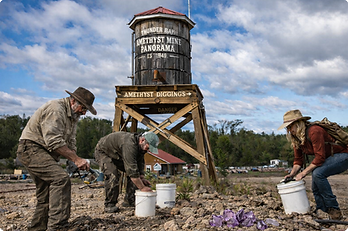
Above: Most of the Thunder Bay amethyst Mines are pay to dig and in this case it is going throught their tailings which can yield nice specimens for beginners.

Above: The author - Mick Gordon at the Desmont Mine property - run by Highlands east municipality near Wilberforce. I hold a boulder of granular diopside and calcite.


Below Left: Trilliumite from the Wilberforce area
Below: Fluor-richterite as found between Wilberforce and Tory Hill


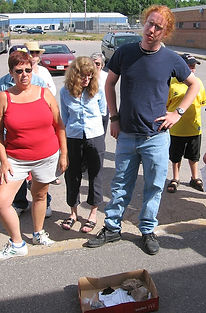
Left: As you enter Bancroft, a town that caters to both cottagers and rockhounds.
Right: Rockhounds prepare for a gemboree sponsored field trip
Far Right: Typical apatite crystals found in the area vein dykes.

Above: Bancroft is known for its radioactive minerals as well as its rare earths and crystals.


Above: A fluorite cluster typical of the mines in the Madoc area.
Far right: A small fluorite crystal on a barite matrix
Right: Fluorite octahedrons as foujnd at the Perry Mine
Top right: Fluorite, strontiumite and barite from Madoc area
Left: James examines old pumping equipment from the Rogers Mine. It was kept in a barn on the property and we had permission from the then land owner to visit. Contarary to what appears on the surface with the lake, water is flowing southwards underground into the lake in enormous quantities. It was this water at a depth of 420 feet that burst into the Roger's mine and flooded it. No amount of pumping was able to keep up.


Right: Agate as found on the beach
Left: a cluster of youperlites as found and piled together at dusk. There is a subset of rockhound that collects only these.

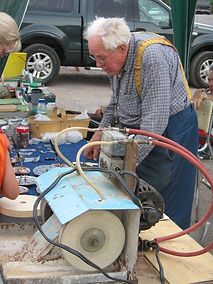
right: Vendors in the parking lot at the Bancroft Gemboree selling sliced Lake Superior agates, cut and buffed.

Right: Known for blue-green cubic fluorite crystals, the Bailey Mine, discovered in the 1890s in Madoc Township, was the first fluorite (fluorspar) mine in the area and the second-largest producer of the mineral in that region. Located near Moira Lake, it operated sporadically between 1905 and 1950, producing over 22,000 tons of ore, with, shaft depths reaching 58 meters (190 feet).
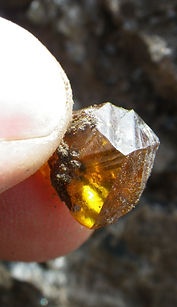


Above: Dogtooth Spar - Queenston Quarry
Above: Rockhounds in a southern Ontario quarry.
Middle: Dolostone crystals often found in pockets of the Lockport dolostone. Far Right: sphalerite - Montrose Occurrence.


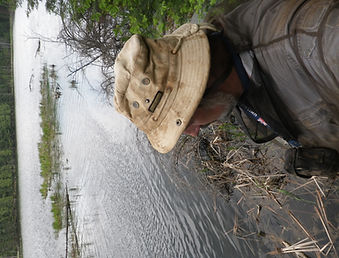
Above: At Dark Star Crystal Mines we believe that the whole experience is what makes the best rockhounding in Ontario, the environment, the history, the people and the crystals, its all part of the experience.


Left and Right: Typical finds on the property of Dark Star Crystal Mines. For $50 you get a full day of rockhounding in virgin calcite fissures. If you are willing to work (dig) you will be suitably rewarded with material that others wont find in less lucrative areas.