


What is Mineral Provenance?
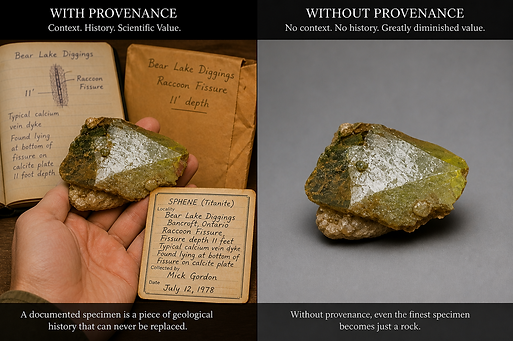
Mineral provenance is the documented history of a mineral specimen—where it came from, who collected it, and how it has been handled over time. In mineral collecting, it’s essentially the “paper trail” that ties a specimen to a specific locality and often to a particular discovery or collector.In short, provenance turns a crystal from just a nice object into a piece of geological history.


Provenance in Mineral Collecting: Why Origin Defines Meaning in the Bancroft Region
Introduction: From Stone to Story
In mineral collecting, a specimen is never just a mineral. It is a fragment of a geological system, a moment in deep time, and increasingly, a documented piece of history and culture. This is what provenance represents: the recorded origin and life history of an object—where it came from, how it was handled, and the sequence of its movement through time. Your crystal is better with a story.
While the concept originated in art history and archival science, it has become central to mineralogy and modern collecting. In regions like Bancroft, Ontario, provenance is not an optional detail. It is what transforms a visually interesting crystal into a scientifically meaningful object.
Without provenance, a specimen may still be attractive. With it, the same specimen becomes interpretable. It connects mineral form to geological process, and geological process to human history.
What inspired the Pink Panther Story
The Daria-i-Noor (“Sea of Light”) is one of the most famous historic diamonds of the Persian crown jewels and has a long, though partially fragmented, provenance tied to the great dynasties and conquests of South and Central Asia. On the one hand the pink diamond is a fantastic gemological treasure, on the other it is a sparkling exotic piece of history whose harvesting was from a place now unknown to modernity.
The Daria-i-Noor is believed to have originated from the legendary Golconda diamond mines of southern India, likely sometime before the 17th century. Due to their low nitrogen content Golconda diamonds were renowned for exceptional clarity and included some of the world’s most famous gems. They are characterized by a "soft, limpid glow". Early references suggest the Daria-i-Noor may once have formed part of a much larger pink diamond known as the “Great Table Diamond,” described by the French jeweler and traveler Jean-Baptiste Tavernier during his travels through India in the 1600s. The exact source of the Golconda diamonds is unknown, but the understanding is that Golconda stones all came from alluvial deposits in the Krishna River Basin.
The Table Diamond entered the treasury of the Mughal emperors of India, likely under rulers such as Shah Jahan, the builder of the Taj Mahal. During the height of the Mughal Empire, enormous diamonds symbolized divine kingship and imperial power, and the Daria-i-Noor was among the treasures held in the Peacock Throne treasury - thogh possibly as part of the Table diamond.
Its provenance becomes more clearly documented in 1739 during the invasion of Delhi by the Persian ruler Nader Shah. After defeating the Mughal forces, Nader Shah seized vast quantities of imperial treasure, including the Peacock Throne. The diamond was then transported from India to Persia, marking one of the most important transfers of royal gemstones in history.
Following Nader Shah’s assassination in 1747, ownership of many Persian treasures became unstable. Some gems disappeared, while others were redistributed among military leaders and royal successors. After Nader Shah’s assassination, the Great Table vanished from historical records. For centuries, historians believed the gem was lost forever. A major breakthrough came in the 1960s when researchers from the Royal Ontario Museum studied the Iranian Crown Jewels. They proposed that the Great Table had actually been split into two famous pink diamonds:
-
the Daria-i-Noor (“Sea of Light”)
-
the Noor-ul-Ain (“Light of the Eye”)
The color, clarity, and matching geometry of the two stones strongly suggest they were once parts of the same enormous pink diamond.
The Daria-i-Noor appears to have remained within Persian royal holdings and later became part of the treasury of the Qajar dynasty during the late 18th and 19th centuries. It was mounted into elaborate royal regalia and became a symbol of Persian monarchy.
Today, the Daria-i-Noor is preserved among the Iranian Crown Jewels in the Central Bank vaults in Tehran. Unlike many historic diamonds that passed through auctions or private collections, the Daria-i-Noor has remained largely within royal and state possession since its transfer from Mughal India to Persia in the 18th century.
Its provenance is especially significant because it connects:
-
the Golconda mines of India,
-
the Mughal imperial treasury,
-
the sack of Delhi by Nader Shah,
-
and the Persian royal collections that evolved into the modern Iranian Crown Jewels.
The gem is also notable for its rare pale pink coloration, a characteristic strongly associated with historic Golconda diamonds.
Why Bancroft Makes Provenance Essential
The Bancroft region sits within the Grenville Province, one of the most geologically complex terrains in North America. Over more than a billion years, the region has experienced repeated metamorphism, intrusive events, pegmatite formation, metasomatism, and alkaline magmatism.
The result is a landscape where similar minerals can form in very different environments. Titanite, apatite, feldspar, calcite, and amphibole may appear visually similar across sites, yet their formation histories can be entirely distinct. Ivory colored dog-tooth spar from southern Ontario's Lockport dolostone will look entirely different than the orange lumpy calcites from the Dark Star Quartz claim - same material two entirely different looks; one is skarn generated, the other forming in dolostone vugs.
A titanite crystal from a skarn records a very different geological story than titanite from a pegmatite. One forms through metasomatic fluid interaction between limestone and intrusive rock; the other through slow crystallization in silica-rich melt. Without provenance, that distinction disappears entirely.
In Bancroft, provenance is therefore not just descriptive. It is interpretive. It is the framework that allows minerals to be understood at all.
At Dark Star Crystal Mines we will help you interpret your crystal, point out its uniqueness in comparison to Bear Lake or Titinite Hill. Who knows how long we will be operating and the legacy that we leave.
A Landscape That Has Changed
Another reason provenance carries unusual weight in Bancroft is that the landscape itself has changed dramatically over time.
The region has seen over a century of extraction activity, including iron mining, feldspar quarrying, mica production, uranium exploration, and small-scale collector excavation. Many historic localities are now:
-
flooded
-
reclaimed by vegetation
-
closed due to safety concerns
-
or located on restricted private land
As a result, direct access to many classic collecting sites is no longer possible. The physical context has often been removed or obscured.
This makes specimens from older collections especially important. They preserve geological and historical information that can no longer be observed directly in the field. In this sense, provenance becomes a surrogate for the landscape itself. At the Bessemer Mine the main pit is flooded, a black mirror whose depths curve under nearby little Mullet Lake. Sure there is the occasional garnet cluster, but exactly where it came from in the mix is pure speculation without a label.
Provenance as Geological Data
In a scientifically meaningful sense, provenance is not just documentation—it is data.
A well-documented specimen can reveal:
-
pressure and temperature conditions of formation
-
host rock chemistry
-
fluid composition and metasomatic processes
-
geological environment (skarn, pegmatite, alkaline intrusion, etc.)
For example, minerals from the York River skarn zones preserve evidence of fluid exchange between intrusive bodies and carbonate rocks. Titanite from these environments is not merely a mineral specimen—it is a record of chemical interaction within the Grenville system.
Without locality information, that interpretive layer is lost. The specimen becomes visually identifiable but scientifically incomplete.
When Appearance Is Not Enough
One of the most important consequences of missing provenance is what can be described as a flattening of geological meaning.
In Bancroft, many minerals appear similar across multiple environments. Apatite may form large euhedral crystals in pegmatites or granular masses in skarns. Feldspar, quartz, and calcite may occur in multiple systems with overlapping appearances.
When provenance is absent, these distinctions collapse. Minerals are then judged only by appearance rather than origin. This removes context and reduces specimens to aesthetic objects rather than geological records. Mineral crystals just become pretty decorations like chrome and brass trophies that do not represent any meaningful achievement, they just look nice.
Provenance restores that missing depth. It allows collectors and researchers to understand not just what a mineral is, but why it formed the way it did. Provenance is the link of the mineral to its environment and other species around it.
Ethical, Economic, and Collecting Context
Provenance also plays an increasingly important role in the ethics and economics of mineral collecting.
Many Bancroft sites are now regulated, inaccessible, or located on private land. As a result, responsible documentation helps verify that specimens originate from legitimate collecting contexts.
In the collector market, provenance functions as a form of authenticity. Well-documented specimens typically carry higher value, not only because they are rarer, but because they are verifiable.
In contrast, vague labels such as “Bancroft area” or “Ontario mineral” significantly reduce scientific and market value, because they erase the geological specificity that gives the specimen meaning.
Cultural Memory and Lost Localities
Beyond science and commerce, provenance plays a quieter but equally important role: preserving cultural and geological memory.
Each named locality in Bancroft—whether a mine, quarry, or roadcut—represents a specific moment in the region’s industrial and geological history. As these sites disappear or become inaccessible, their memory survives primarily through specimens.
A well-labeled mineral becomes a record of a vanished landscape. It preserves not just geological data, but also the history of the people who worked, collected, and studied there.
In this way, provenance is a form of archival preservation. It connects present collectors to past geological activity.
Bear Lake: A Different Kind of Provenance
Any Ontario rock and mineral show will bewilder the diligent collector of providence weighty stones by the number of supposed Bear Lake specimens. Ferri – fluoro – Kataphorite is a favorite. Everyone and their brother seems to be selling those crystals. Truth be known, it takes a lab test to determine the exact composition of such amphiboles and yet everyone claims to have such a specimen.
Bear Lake occupies a unique position within the Bancroft landscape. Unlike major mining sites, it represents a convergence of geological environments, where skarns, pegmatites, and metamorphic rocks intersect. It’s a well known collecting locality, said to have specimens in museums across the world, but when the site closed Bancroft lost its most esteemed collecting spot. Being easy to access and a place to which pros and newbies were equally directed it got a lot of traffic. This gives it strong scientific potential, particularly when specimens are well documented.
Its unusual to have a rock and mineral show in Ontario without some vendor having Bear Lake specimens up for sale, but unfortunately it seldom gets more detailed than "Ferri-fluoro-Kataphorite - Bear Lake". Well now that the site is privately held and no longer accessible to rockhounds it becomes difficult to understand the complexities of the bigger picture because now days there are hordes of collectors at Titanite Hill and a more select group at Dark Star. Appearance is there, but science is somewhat lacking.
New rockhounds did not understand the value of documentation, thus specimens that survived to be traded from informal collectors to more diligent collectors are often without provenance – no more than a Bancroft vein dyke label to establish them in the geological picture. This makes well-documented material from Bear Lake Diggings relatively rare and therefore more valuable. In cases where provenance is precise, Bear Lake specimens rival those from more prominent localities, demonstrating that significance often depends on documentation rather than scale. Due to the free-willy approach to the Schickler Property, the same concerns have been voiced.
The German Standard
Globally, the strongest culture of provenance is found in Germany, particularly in historic mining regions such as the Erzgebirge. Here, minerals are treated primarily as scientific and historical objects, and precise locality information is considered essential. Specimens are often labeled with detailed data, including mine name, vein, and level.
This approach reflects a long tradition of mineralogical study and documentation. In the German context, a specimen without provenance is often considered incomplete. This emphasis has influenced collecting standards worldwide and highlights the importance of locality in understanding minerals.
Case Studies: Why Specific Localities Matter
The importance of provenance becomes especially clear when examining classic Bancroft localities.
The Faraday Uranium Mine, active primarily in the mid-20th century, produced uranium minerals such as uraninite and uranophane. Because mining occurred in multiple phases and locations, precise labeling—down to pit or dump source—can significantly change the scientific interpretation of a specimen.
Similarly, the Bicroft Uranium Mine had a relatively short operational period. Specimens from this site are often visually similar to other uranium localities, making detailed provenance essential for correct identification.
The York River skarn zones provide another example. Multiple skarn lenses exist along the belt, each producing titanite, diopside, and calcite under slightly different conditions. Without exact locality data, these differences cannot be resolved.
The Quadeville beryl pit and Wilberforce quarries present a different issue: long histories of small-scale extraction across multiple pits. Many specimens from these regions circulate with vague or outdated labels, making provenance the primary tool for distinguishing origin.
Across all of these sites, one pattern is consistent: identical-looking minerals can carry entirely different geological meanings depending on their source.
What Strong Provenance Actually Looks Like
A high-quality mineral label from Bancroft does more than name a location. It reconstructs context.
A strong example might include:
-
precise locality (not just “Bancroft”)
-
geological setting (skarn, pegmatite, alkaline complex, etc.)
-
mode of occurrence (in situ, dump material, vein exposure)
-
collection period
-
associated minerals
-
collector or documented source
For example:
Titanite with diopside and calcite
Skarn lens at marble–intrusive contact
York River skarn zone
Collected in situ by Michael Gordon, 1972
Associated coarse diopside pods
This level of detail allows the specimen to be placed back into its geological environment with high confidence. It becomes both scientifically useful and historically grounded.
An Air-tight Provenance
Aside from basic geological data you might decide to go all the way for truly exceptional specimens. The following two extra details will seal your case for air-tight provenance. Admittedly being front line collectors - actually harvesting crystals from the forest, you will probably be the first in the provenance line, but the provenance must a start somewhere.
-
Chain of Ownership: A timeline tracking all previous owners, dealers, or museums that have held the specimen.
-
Exhibition and Literature History: Documentation if the piece was featured in museum displays, mineralogical books, or scientific journals.
An example of a well documented provenance are the “Maltese Cross” staurolite specimens from Georgia and Virginia. Exceptional crystals collected during the late 19th and early 20th centuries were often acquired by early mineralogists, then passed into university collections, private estates, and eventually auction houses. Auction catalogs frequently list former owners, including noted collectors or institutions, because provenance can substantially increase a specimen’s value and historical importance.
An especially strong example of high-value provenance specimens comes from the collection of Clarence S. Bement, one of the most influential mineral collectors in history. Specimens from the “Bement Collection” were eventually acquired by the American Museum of Natural History in the late 1800s. Today, minerals with documented Bement provenance are highly sought after because collectors can trace ownership directly back to one of the foundational figures in American mineral collecting. Now you may not be a person of note in the mineral world, but Bancroft is a world-known location for certain minerals and places lake Faraday and Bear Lake are the pinnacle of rockhounding sites for different reasons.
A Kashmir Provenance
The provenance of Kashmir sapphires is one of the most important factors affecting their rarity, value, and historical significance. Genuine Kashmir sapphires originate from the historic mines of the Zanskar region in Kashmir, discovered in the late 19th century after a landslide exposed sapphire-bearing deposits high in the Himalayan mountains. Production from these mines was limited and sporadic, and by the early 20th century the most productive deposits were largely exhausted. Because of this, nearly all fine Kashmir sapphires on the market today are antique stones with long ownership histories.
A strong chain of ownership is especially important for Kashmir sapphires because modern stones from other regions are sometimes misrepresented as Kashmiri material. Provenance may include original estate records, historic jewelry documentation, auction catalogs, dealer invoices, or gemological laboratory reports tracing the sapphire through generations of collectors, royal families, jewelers, or auction houses. Many notable Kashmir sapphires have passed through prestigious European jewelry houses and private aristocratic collections before reappearing at major auctions decades later.
Exhibition and literature history also play a major role in establishing provenance. Exceptional Kashmir sapphires have appeared in museum exhibitions, famous auction sales, gemological journals, and books devoted to historic gemstones. Stones documented in publications from organizations such as the Gemological Institute of America or featured by major auction houses gain additional credibility because their identity and characteristics become part of the historical record.
One famous example is the “Jewel of Kashmir,” a remarkable sapphire and diamond necklace sold through Christie’s. The sapphire’s provenance included documented ownership history, laboratory certification confirming Kashmiri origin, and public auction records that traced its movement through elite jewelry collections. Another example is the “Blue Belle of Asia,” a historic sapphire associated with royal and aristocratic ownership that later appeared at international auction with extensive gemological and provenance documentation.
Because true Kashmir sapphires are so rare, provenance is often considered nearly as important as the gemstone itself. Features such as old-cut faceting styles, historical jewelry settings, original collection labels, and long-documented ownership histories help support authenticity alongside laboratory testing. In the modern gemstone market, a Kashmir sapphire with strong provenance can command dramatically higher prices than a similar sapphire lacking documented history.
A Shift in Collecting Culture
Over time, mineral collecting culture has shifted significantly toward documentation and scientific transparency.
Collectors, museums, and serious dealers increasingly expect full locality data. At the same time, digital marketplaces have made it easier to verify or challenge vague provenance claims.
This has led to a decline in the acceptability of generalized labels and a rise in demand for precise locality attribution.
In parallel, the loss of accessible collecting sites has increased the importance of historical specimens. As field access decreases, documented material becomes the primary way to preserve geological knowledge.
Conclusion: From Object to Evidence
In the Bancroft region, provenance is what transforms minerals from objects into evidence.
Without it, a crystal remains a visually interesting fragment of rock. With it, the same specimen becomes a record of geological processes, industrial history, and human interaction with the landscape.
Provenance is ultimately what gives minerals their meaning. It is the link between physical material and geological story. In a region as complex, altered, and historically rich as Bancroft, that link is not optional—it is fundamental.
A mineral without provenance is an object.
A mineral with provenance is a document.
And in Bancroft, the document is often more valuable than the stone itself.
Provenance requires a strict documenting of origins upon which the bigger story can be built. Below: This mineral is from Madoc, to the right this mineral is identified as to exactly where it is from




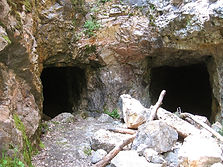
Right: James slithers down the embankment at the old "York River Skarn". You can still see the spot, but finding old york River Skarn minerals is a bit more ellusive.
Far Right: Machinery that once worked in the Madoc area to support the Roger's Mine.
Below: The now off-limits MacDonald Mine

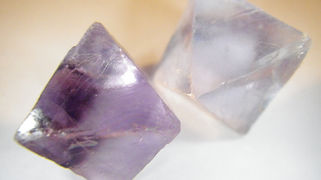
What do these fluorite pictures tell you about Bancroft fluorite - Nothing! Left is from Niagara Falls area and right is Madoc. They needed labels.


So much comes from the Bear Lake Area, but what is Dark Star and what is from the diggings? It's important to differentiate. Right: Mark is deep in Hubbert's Hole on the Dark Star Claim, he's looking for titanitie, but clearly it is an entirely different titanite from what is displayed to the left. The left was also from Dark Star, but another fissure.
There are titanites aplenty in the Bear Lake area, but to understand the context you need to understand whether this was from the Dark Star Crystal ines, or the Old Bear Lake Diggings - just going on appearance its not that impressive.


Right: The Golconda Fort region was once home to the legendary Golconda diamond mines, among the most famous gem-producing areas in world history. Located along the Krishna River in what is now the Indian states of Telangana and Andhra Pradesh, these mines supplied many of the world’s most celebrated diamonds between the 16th and 18th centuries. Before diamonds were discovered in Brazil in the 1720s and later in South Africa, India was essentially the world’s only major source of diamonds, and Golconda became synonymous with extraordinary quality and rarity.
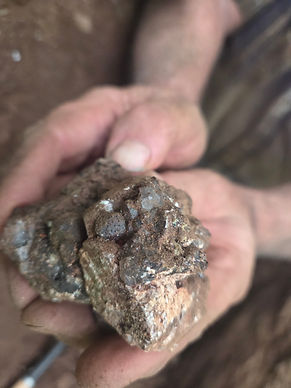

Bio: Michael Gordon, Dark Star Crystal Mines
Michael Gordon (Mick) is co-founder of Dark Star Crystal Mines. Michael has a degree in geography from the University of Guelph, a diploma in gemology from the TCG and he is also a certified diamond grader. Michael has been a lifetime rockhound specializing in Bancroft area vein dykes and that is the main product of the Dark Star Crystal Mines. Having authored the 3 part series "Rockhound", Michael's writing has appeared in newspapers, magazines and books, his first having been published in 2005 (Rockwatching) by Boston Mills Press.
Last updated 2026