


Discover the mineral-rich road cuts in Bancroft, Ontario and surrounding townships, one of Canada’s premier destinations for rockhounding and field geology. The Bancroft area road cuts expose ancient pegmatites, skarns, and metamorphic formations carved into the Canadian Shield, offering collectors the chance to find feldspar, titanite, apatite, amphibole, pyroxene, and other classic Bancroft minerals. At Dark Star Crystal Mines, we guide you through the best roadside rock exposures in the Bancroft region, with expert tips on where to look, what to identify, and how to collect responsibly in Ontario’s most celebrated mineral district.
How to find the Best Bancroft Road Cuts: The Ultimate Rockhounding Guide
As an amateur geologist or rockhound in Ontario, few places offer the mineral diversity of Bancroft road cuts. These roadside exposures—fresh rock faces created by blasting or excavation—reveal pegmatites, skarns, folded metamorphic rocks, and other fascinating formations. While pristine crystals are rare in road cuts, these sites are perfect for collecting mineral specimens and learning how geological features guide mineralization.
For beginners, Bancroft road cuts provide an accessible introduction to Ontario’s Canadian Shield geology. For experienced collectors, they hint at larger deposits hidden beyond the roadside. In this guide, we’ll explore the best road cuts, what minerals to expect, and how to maximize your rockhounding success in Bancroft.
Table of Contents
-
How to Find the Best Bancroft Road Cuts: A Field Guide for Rockhounding
-
Why Bancroft Road Cuts Matter for Ontario Rockhounds
-
Crystals vs. Mineral Specimens in Road Cuts
-
Bancroft Road Cuts: Beginner-Friendly Mineral Collecting
-
Canadian Shield Rocks and Minerals in Bancroft Road Cuts
-
Bancroft Area Road Cuts: What You’re Most Likely to See
-
Why Bancroft Road Cuts Are Exceptional
-
Do Minerals Extend Beyond the Roadside Exposure?
-
Insider Tips: Rail Cuts, Old Roads & Blast Debris
-
Ontario Road Cut Safety for Rockhounds
-
Finding Minerals in Exposed Pegmatites in Ontario Road Cuts
-
Finding Minerals in Exposed Skarns in Ontario Road Cuts
-
Where Rocks Are Folded in Bancroft Road Cuts
-
Near Igneous Intrusions in Bancroft Road Cuts
-
Marble Belts & Calc-Silicate Zones in Bancroft Roadside Exposures
-
Faults & Fracture Systems in Ontario Road Cuts
-
High-Grade Metamorphic Banding (Gneissic Foliation) in the Grenville Province
-
Field Techniques for Ontario Road Cut Collecting
-
Why Bancroft Roadside Exposures Are So Special for Collectors
-
Mineral-Bearing Highway Outcrops & Roadside Localities Near Bancroft
-
Top 15 Rockhounding Road Cuts & Roadside Sites in the Bancroft Area
-
Frequently Asked Questions (FAQ) About Bancroft and Ontario Road Cuts
-
Final Thoughts on Ontario Road Cuts and Bancroft Rockhounding
Why Bancroft Road Cuts Matter for Ontario Rockhounds
Learn why these roadside exposures are perfect for mineral collecting, from beginner specimens to advanced field studies.
There is a great diversity of minerals in Ontario and specifically in the Bancroft area. Bancroft road cuts are a good place to start looking for minerals if you are new to rockhounding. There is a great deal of learning to be had in the Bancroft area road cuts and by learning how to easily identify geological features you can apply them to the terrain within Ontario and build on your success quite remarkably.
Crystals versus Mineral Specimens in Road Cuts
Understand the difference between pristine crystals and mineral specimens and how Bancroft road cuts fit into your collecting strategy.
If you are looking for pristine crystals you need to stretch your search beyond road cuts. Bancroft blast exposures are not great for crystals in pristine condition, firstly for the blasting that has taken place and secondly for the years of human traffic. Crystal pockets in road cuts are gouged out within days of the initial blasting, but there are always exceptions. I remember a day on Musclow- Greenview road when behind a rusty seam I opened a huge crystal pocket.
Usually finding the best crystals involves looking beyond the roadside exposure and sometimes looking away from the road cut altogether and toward extraction from Ontario vein dykes and exposed pegmatites. We accommodate those needs to find crystals on our Dark Star Crystal Mines site. Book a self dig here.
If you are wondering where to find crystals in Bancroft, road cuts might not be your thing. Road cuts are more about mineral specimens. You can gather samples of any number of obscure rock species - that is great for beginners. Alternately you can use road cuts for guidance as to what else might be laying around. Look on road cuts as natural advice as to what lays behind the exposed face and off into the forest.
Bancroft Road Cuts: Beginner-Friendly Mineral Collecting
A closer look at why these roadside sites are ideal for first-time collectors.
So if you are just starting out – a beginner rockhound, the best road exposures in Ontario should be on your agenda. Most specifically Bancroft road cuts are something that you should pay attention to.
So often I find myself just standing and staring at a rockface, the passengers in my car frustrated at the many delays in our trip and me just grooving on the “Rockhound vibe”. Unless you are a rockhound there is nothing that I can say to explain it. Cottagers fly by in their SUVs some honk in recognition of a buried desire, others lay on their horn in distain. Me? I don’t care, I’m in my own world and much as I have several prime crystal bearing claims at my disposal (Dark star Crystal mines) I still can’t help but stop and look at the rock.
Canadian Shield Rocks and Minerals in Bancroft Road Cuts
Explore the geology exposed in road cuts, including pegmatites, skarns, folded metamorphic rocks, and igneous intrusions.
Ontario is rich in diverse geology, from Canadian Shield granite to greenstone belts and skarn deposits. Road cuts along highways, railways, and rural back roads often reveal fresh exposures of pegmatites, skarns, folded rocks, and igneous intrusions—perfect for collectors. And lets not forget when there is roadwork – now that’s truly opening the treasure chest. Those guys with explosives are pure Santas in hard hats for Ontario rockhounds.
Bancroft Area Road Cuts
What You’re Most Likely to See
-
Skarn zones with calc-silicates
-
Folded gneiss, migmatite
-
Marble bands
-
Vein-related mineralization
Bancroft offers the widest mineral diversity — pegmatite crystals, skarn assemblages, and metamorphic accessory minerals — making it one of Ontario’s top road cut collecting regions.
Table of Bancroft Road Cuts vs. Regional Road Cuts
Why Bancroft Road Cuts are Exceptional
Discover what makes Bancroft exposures unique, from high-grade metamorphic terrain to rare-element pegmatites.
The Bancroft area of Ontario sits within the Grenville Province of the Canadian Shield — a billion-year-old high-grade metamorphic terrain. Because of this, roadside exposures around Bancroft reveal some of the most geologically complex and visually striking rocks in Canada.
Bancroft road cuts are some of the best accidental outcrops available to mineral collectors. When highways slice through hillsides, they expose fresh geology that would otherwise remain hidden beneath soil and vegetation. With the right eye, these exposures can reveal pegmatites, skarns, folded metamorphic rocks, and igneous intrusions—all prime environments for collectible minerals.
Do Minerals Extend Beyond Bancroft Road Cuts?
Understanding how road cuts reveal deeper mineralization beneath the roadside exposure.
Something to consider, but its not always obvious to travelers is that what you see in the road cut continues on beneath the vegetation behind the rock face. If that’s crown land its sometimes worth a poke with your shovel. Mineral deposits are not 2 dimensional etchings on a wall, they stretch back and down and sideways. Even if stripped you know the road cut telegraphs what else is lying around.
What follows is a field-focused guide to the main geological features you can see in Bancroft area road cuts and also how best to exploit those geological features to find crystals and valuable mineral specimens.
Insider Tips: Rail Cuts, Old Roads & Blast Debris
Maximize collecting success with abandoned rail lines, old settler roads, and blast debris around Bancroft.
For over 150 years now the Bancroft area has been mined and blasted for minerals. Much as the best Bancroft road cuts might be your focus there are plenty of abandoned rail cuts that could yield promising mineral specimens as well. Usually there is an ATV trail along an abandoned rail line so its easy access, but way less traveled by competing rockhounds.
Take the back roads, the cuttings are less impressive, but alternately they have also been less picked -over. Also there are the old settler roads (e.g. Old Hastings Road) that though they were more gently laid upon the terrain, there are still great rockhounding opportunities there. Think of Bancroft's many now disused mines and quarries. They had to move the minerals from mine to market, what routes did they take and where did they inadvertently spill tailings. Were minerals piled beside the now abandoned rail line for later loading? Sidings are the best areas to check. If there is a mound beside the siding its either coal or minerals.
After a road cut in Bancroft’s hilly terrain there is often a valley filled with the blast debris from the cutting. Think of looking there. In a nutshell, to be successful as a beginner rockhound you must be as much archeologist as geologist. Start with road exposures and from there move on to pegmatites, skarns and vein dykes. As an Ontario rockhound, you can only progress in pace with your knowledge. Anything outside that is just good or bad luck.
Looking at rock cuts it’s a 2 dimensional teaching if you take it as such. You can begin recognizing geological features and where minerals are found in relation to the features. Once you are relatively comfortable with how the basic processes work you can then easily move on to basic prospecting, working in 3 dimensions, digging your own vein dykes, pluming the length of a pegmatite or sketching out the bleached rock of a skarn.
Ontario Road Cut Safety for Rockhounds
Essential safety tips for parking, protective gear, and avoiding hazards on roadside exposures.
• Always park off the road.
• Wear a high-visibility vest and eye protection.
• Watch for loose rock or overhanging slabs.
• Follow local collecting rules; some exposures are on Crown land, others on private property.
• If your debris rolls onto the road remove it immediately.
• Climbing the face to check a vug is ill advised. A fall can hurt you badly.
• It’s not a good idea to have your dog in attendance. Your rockhound might end as a dead hound in passing traffic.
Finding Minerals in Exposed Pegmatites
How to spot mineral-rich zones, pockets, and crystal cores in pegmatites that are exposed in Bancroft Road cuts.
In Ontario, pegmatites are especially common in the Canadian Shield, including areas around Thunder Bay, Bancroft, and the Haliburton Highlands.
Where to Look
1. Contact Zones
The interface between pegmatite and granite or gneiss often contains pockets rich in feldspar and quartz.
-
Example: Bancroft area pegmatites host mica, spodumene, and beryl along contacts.
2. Pockets and Vugs
Look for cavities lined with crystals, often at the pegmatite core. Iron-stained rocks sometimes indicate sulfides.
3. Internal Zoning
Ontario pegmatites often show:
-
Border zone (fine-grained quartz/feldspar)
-
Wall zone (larger crystals of feldspar and quartz)
-
Core (best crystals, including beryl and tourmaline)
Minerals to Watch For
-
Feldspar (microcline, amazonite)
-
Mica (muscovite, biotite)
-
Spodumene, beryl, and tourmaline (most likely north of Thunder Bay)
Finding Minerals in Exposed Skarns in Ontario Road Cuts
Skarns in Ontario occur where granite intrusions interact with limestone or dolostone, such as the Temagami, Cobalt, and Marmora regions. Learn how to spot a skarn in a road cut.
Where to Look
1. Limestone–Intrusion Contacts
Check areas with sharp color changes. Ontario skarns clearly exposed in rock faces often show red/brown garnet zones replacing carbonate rock.
2. Garnet-Rich Zones
The Marmora garnet deposits are famous for massive garnet in skarn host rocks.
3. Oxidized Zones
Rusty fractures and shear zones can indicate sulfide mineralization.
Minerals to Watch For
-
Garnet (grossular, andradite)
-
Wollastonite
-
Diopside
-
Magnetite
-
Epidote
-
Chalcopyrite
Where Rocks Are Folded in Bancroft Road Cuts
Ontario’s Grenville Province and Algonquin Highlands display dramatic folding, especially in metamorphic belts, the Bancroft area being a prime example.
Where to Look
1. Fold Hinges
The hinge zone concentrates quartz veins and creates small cavities.
2. Along Axial Planes
Quartz and feldspar often align with fold axes; metamorphic minerals like garnet and staurolite can appear here.
3. Cross-Cutting Fractures
Later fractures in folded rocks host calcite, quartz, and pyrite.
Minerals to Watch For
-
Garnet in schist and gneiss
-
Staurolite, kyanite, sillimanite
-
Quartz veins and pyrite
Near Igneous Intrusions in Bancroft Road Cuts?
Ontario has numerous igneous intrusions, from Sudbury’s nickel-rich dikes to Algoma granites. These intrusions drive hydrothermal fluids and create mineral-rich zones. If you can quickly identify igneous intrusions in a Bancroft road cut you will be more successful at finding good mineral specimens.
Where to Look
1. Dikes and Sills
Thin intrusions cutting across sedimentary or metamorphic rocks often host small quartz veins.
2. Brecciated Zones
Broken, cemented rock indicates fluid pathways. Example: Sudbury breccia zones are often mineralized with pyrite and chalcopyrite.
3. Alteration Halos
Chlorite alteration, iron staining, or silicification around contacts is common in Ontario intrusions.
Minerals to Watch For
-
Quartz, fluorite, calcite
-
Sulfides (pyrite, chalcopyrite, galena)
-
Epidote, actinolite
Marble Belts & Calc-Silicate Zones in Bancroft Roadside Exposures
What You’ll See
-
White to grey crystalline marble
-
Green diopside bands
-
Fibrous tremolite
-
Brown titanite crystals
-
Graphite streaking
What It Means
These were originally limestone or dolostone layers that were deposited in ancient seas. By way of regional or contact metamorphosism these sedimentary layers were then heated and pressured and they metamorphosed into marble. You are less likely to see carbonatites, but they were deposited by hydrothermal action.
Why It Matters for Collectors
Calc-silicate zones are prime spots for:
-
Diopside
-
Scapolite
-
Titanite
-
Phlogopite
-
Apatite
These zones are especially common along Highway 62 and Graphite Road exposures.
Road Cuts in Bancroft Displaying Faults & Fracture Systems
What You’ll See
-
Straight cracks cutting through otherwise solid rock
-
Parallel sets of vertical or horizontal breaks
-
No obvious offset of layers
-
Blocks breaking into rectangular shapes
-
Quartz or calcite filling thin cracks
Often these appear as evenly spaced vertical breaks in granite or gneiss road cuts.
What It Means
Joints form when rock is stressed but not displaced. In Ontario, this commonly happened during:
-
Post-Grenville uplift
-
Glacial unloading (pressure release after ice sheets retreated)
-
Regional tectonic stress
These fractures are important because they:
-
Act as fluid pathways
-
Control weathering patterns
🔎 Collector Tip: Quartz, calcite, epidote, and occasionally fluorite often fill joint systems.
High-Grade Metamorphic Banding (Gneissic Foliation) in the Grenville Province
What You’ll See
-
Alternating light and dark mineral bands
-
Pink feldspar + grey quartz layers
-
Dark biotite or hornblende bands
What It Means
These rocks were buried deep (20–30+ km) and subjected to extreme heat and pressure during the Grenville mountain-building event (~1.0–1.3 billion years ago).
Field Tip
Follow the banding across the exposure — you’ll often see it folded or offset by later deformation. In our experience with vein dykes, titanite and other minerals seem to form at the contact zones between gneiss and calcite intrusions.
Field Techniques for Ontario Road Cut Collecting
Best practices for scanning, collecting, and observing roadside exposures safely.
• Walk slowly and scan at different angles.
• Look at talus at the base—fresh breaks often fall down slope.
• Use a hand lens (10x minimum).
• Tap loose blocks rather than hammering the face.
• Visit after heavy rain—fresh surfaces are easier to spot.
• Early morning or late afternoon light enhances crystal faces.
Why Bancroft Roadside Exposures Are So Special for Collectors
Explore the diversity of skarns, pegmatites, marble belts, and complex folding unique to Bancroft. Few places in Ontario aside from Bancroft expose:
• High-grade metamorphism
• Skarn mineralization
• Rare-element pegmatites
• Marble belts
• Complex folding
• Structural overprints
All within short driving distance. It’s why Bancroft is said to be the “Mineral Capital of Canada”.
The road cuts act like vertical geological cross-sections through a billion years of crustal evolution.
Mineral-Bearing Highway Outcrops Near Bancroft, Ontario
Detailed list of must-visit Bancroft road cuts and nearby mineral exposure sites.
Here’s a list of 15 exceptional rockhounding road cuts and nearby roadside/mineral exposure localities around Bancroft, Ontario — many of which are classic collecting spots for minerals, pegmatites, skarn rocks, amphiboles, quartz and more. You will easily find exact locations on mindat.org
Best Rockhounding Road Cuts & Roadside Sites in the Bancroft Area
-
Faraday Hill Road cut – Classic roadside exposure near the TV tower hill above Highway 118 / Monck Road. Known for calcite-tremolite zones in metasediments. Common to find small blue apatite crystals and black uranite cubes in orange calcite.
-
Graphite Road exposure – On north side of Graphite Road just west of Musclow Road. Amphiboles, diopside, phlogopite, titanite & tremolite often reported.
-
Highway 28 Road Cuts (Bancroft → Denbigh) – Multiple exposures of gneiss, pegmatitic fragments and accessory minerals. Indexed in local collecting guides.
-
Highway 62 Road Cuts (south/southeast of Bancroft) – Roadside exposures of calcite, scapolite, graphite and other metamorphic accessory minerals.
-
Hybla Road exposure – Hastings Highlands roadside cuts with metamorphic mineral assemblages typical of the region.
-
Bower’s Point Road cut (Baptiste Lake area) – Roadside skarn mineralization exposures (including amphiboles).
-
Little Cardiff Lake Road cut (Highlands East) – Grenville metamorphic rock exposures with skarn minerals.
-
Hwy 620 Road cuts (Chandos area) – Grenville bedrock exposures with metamorphic minerals; good for rides through metavolcanic and metasedimentary rocks.
-
Hwy 28 Eel’s Creek Road cut – Exposed Grenville rocks with accessory crystals reported by local rockhounds.
-
Dyno Road blast exposures (near Hwy 28 Junction) – Amphiboles and actinolite reported along roadside exposures. follow up dyno road - many great tremolite clusters have been found in the horizontal rock at the side of the road.
-
HWY 507 Road outcroppings (near Gooderham) – Local calcite veins with graphite in roadside exposures.
-
Hwy 62 North Roadcut (Maynooth Area) – Roadside exposures known for Grenville bedrock with meta-silicate minerals such as allenite in diopside veins.
-
Grace Lake Roadcut – Reported roadside cut with actinolite, diopside, phlogopite, quartz, molybdenite and pyrite (classic amphibole-rich exposure) — a known collector stop in the region. Sadly current land ownership puts this one out of bounds.
-
“Titanite Hill / Tory Hill” Roadside Area – Popular informal collecting locale near Bancroft (including near Foodland and adjacent ditches/road cuts) with amphiboles and accessory minerals often found by local rockhounds
Frequently Asked Questions about Bancroft and Ontario Road Cuts.(FAQ)
1. What is the difference between a road cut and a rock cut?
There is no practical geological difference. A road cut (or rock cut) is a man-made exposure created when blasting or excavating through bedrock for highways, railways, or old settler roads. For rockhounds, they provide fresh, accessible exposures of otherwise hidden geology.
2. Are Bancroft road cuts good for beginners?
Yes. Bancroft road cuts are ideal for beginner rockhounds because they expose pegmatites, skarns, marble belts, and folded metamorphic rocks all within short driving distances. They offer diversity, accessibility, and strong teaching value.
3. Why are contact zones so important?
Most mineralization occurs where two different rock types meet. These zones focus heat, fluids, and pressure—conditions necessary for crystal growth and mineral replacement.
4. Are abandoned rail cuts worth exploring?
Yes. Abandoned rail cuts and old settler roads often receive far less attention than highway road cuts. They can expose similar geology with reduced competition from other collectors.
5. Are minerals only found in the exposed face?
No. The road cut is a cross-section. The geology continues back into the forest and down into the ground. If the exposure is promising and collecting is permitted, areas behind or below the cut may contain similar mineralization.
Final Thoughts on Ontario Road Cuts and Bancroft Rockhounding
Road cuts and rail cuts are geological cross-sections—temporary windows into deep processes. The infilling of valleys is less structured, but still abundant in minerals from the closest cutting. The best finds usually occur where:
• Two rock types meet - transitions
• Fluids once moved – especially within hydrothermally altered zones near intrusions
• Pressure concentrated
• Magma interacted with sediment
• At the edges of dykes that have intruded
• Pockets and cores within pegmatites
• Where the fewest rockhounds have been digging
If you learn to recognize contacts, folds, zoning, and alteration, you dramatically increase your chances of finding quality mineral specimens.
For collectors working pegmatites and skarns—as many of us do at Dark Star Crystals—roadside blast exposures are often the first clue to something much larger, deeper in along the axis of the formation.
Ontario’s best road cuts reveal a cross-section of Canadian Shield geology, Grenville metamorphics, and various crystal and gem yielding geological formations.
With careful observation, safety, and a little patience, Ontario roadside blast exposures can yield minerals, and unique specimens that rival those found in more remote sites. In Bancroft, more so than elsewhere in Ontario you will find a concentration of geological features and a wide diversity of mineral species.
For a beginner rockhound in the Bancroft area I strongly recommend road cuts to begin your experience. You will learn as you collect.
About Michael Gordon – Dark Star Crystal Mines
Michael Gordon is a co-founder of Dark Star Crystal Mines, Bancroft, Ontario and a lifelong rockhound, mineral educator, and ethical crystal advocate. Through ethical crystal mining in Canada, Michael focuses on education, safety, and preserving the integrity of Earth crystals from Bancroft. He has a degree in geography and a diploma in gemology. Michael is author of the 3-part rockhound series books and also curator of the popular you-tube channel - Caver461.


Left: Extracted from the now closed Grace Lake Road Cut (small diopside). Just east of wilberforce the road cut exposes a pyroxenite Skarn. Within the skarn I have found diopside, and incredible grass-green tremolite (gem quality). Past collectors have found crystals of similar quality, but as big as "milk cartons" - said to be lying in the dirt on top of the cap rock. This site is now closed to public access.


Above: Mineral specimen, quartz and sandstone from road cut in Port Severn area, Left: tremolite crystal from Grace lake. It is far more common to find mineral specimens than crystals at road cuts.

Right: Rockhounds examine an intruded gabbro in a roadcut on the highway between Wawa and Chapleau. they know the darker rock is a gabbro not a basalt because the rock is "phaneritic", that is, the crystals can be seen with the naked eye. Granites tend to be lighter, basalts are darker - see the Dark Star Crystal Mines article on igneous geology.


Above and left: The quartz occurrence just off Highway 400 by Port Severn was thought by many to be fully tapped out, but recent discoveries and digging in the soil atop and behind the cut have revealled a whole new series of hitherto buried pockets. It's much the same for most rock cuts, those in Bancroft being no exception.


Left: Old Hastings Road in the Bancroft area. Being an older construction and now somewhat disused the road has been lain more over the hills than through them. There are less road cuts, but those that you find are less picked over. Most of what you see is the natural features and roads winding around and over them.
Right: James (Mick's father) at Jelly Rapids, a feature where Beaver Creek goes underground and leaves fascinating geological exposures. This feature is in heavily metamorphosed rock just before the Ghost town of Glanmire (Old Hastings Road). all that is left now is the Glanmire cemetery.

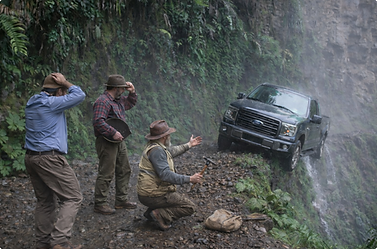
Above and Left: Careful where you park your car when you are out road cutting. If I recall correctly the incident on the left was above a road cut on Turrif Road, just south of Bancroft. Two young guys were out for a joyride with dad's jeep and they happened upon the road cut from the wrong direction.

Left: A pegmatite is typified by its larger crystal size - here a granitic pegmatite.

Right: The picture says it all. An igneous intrusion touches against a limestone or dolostone and by way of super-heated fluid migration, the surrounding rock is altered into a skarn. Specific minerals and crystals are associated with skarns. See the Dark Star skarn article for a deeper explanation.


Left: I spotted a small fissure in the rock beside the Musclow-Greenview Road just north of Bancroft. I couple of hours digging opened up this cavity and its entire inside was lined with plates of crystal as seen above.

Right: Geological folds are ductile deformations where planar rock layers (like sedimentary strata) bend, warp, or buckle into curves without breaking, typically occurring deep within the crust under intense compression, high pressure, and heat. While many rocks fracture (brittle deformation), they can bend (ductile deformation) when exposed to high confining pressures and temperatures (roughly 25°C per kilometer of depth). Some specific, already-solidified rock layers like sandstone or limestone can also bend without fracturing under specific, rapid, high-pressure events


Above just north of highway 28 on Dyno Road we had the good fortune of discovering new construction to widen the road. Digging as we did we soon found actinolyte (right)


Left and above: I suffer badly from cabin fever in the winter so I set out to the Canoe Lake Road cut where I found blue apatite in this granular calcite. The deposit is a calcium vein dyke that is oddly missing other silicate minerals.

Right: Classic iron oxide staining — likely limonite / goethite derived from weathered pyrite or other iron-bearing minerals. Very common in Ontario road cuts and pegmatitic systems.